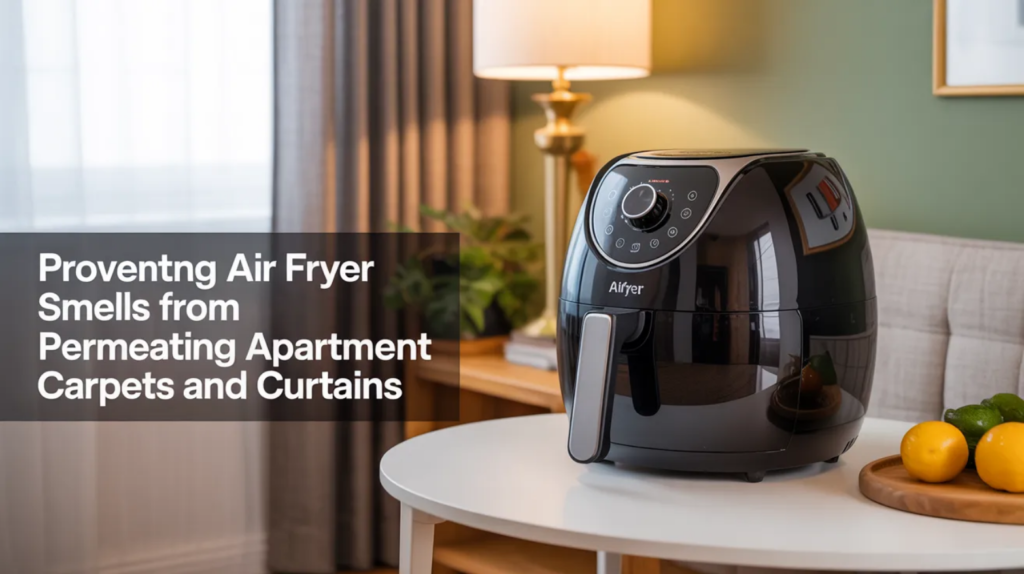
Air fryer smells hit harder in small apartments because the same amount of cooking exhaust gets concentrated into less air, then sticks to more “close-by” surfaces. When that happens, the odor stops being a short-lived cooking smell and turns into residual odor that can pop back up later.
Danger-first check
Stop using and unplug now if the smell is burning plastic, electrical/ozone, or rubber, or if there’s smoke, sparking, buzzing, melting, or a tripped breaker. A stronger smell in a small apartment can make an electrical problem feel “normal,” so treat those cues as a hard stop.
If it smells like grease, fried oil, or heavy seasoning and the unit runs normally, this is usually a concentration + deposition issue you can fix.
The “small apartment effect” in four fast truths
1) Less air = faster saturation
A small space has less volume to dilute what the fryer releases, so the odor reaches noticeable levels sooner. That’s why you can cook the same food in a bigger home and barely notice it, then cook it in a studio and feel like it “took over.”
Confirmation clue: You smell it within minutes, even on low-odor foods.
2) More nearby surfaces = more places for smell to stick
When the fryer is close to cabinets, walls, curtains, or a sofa, the exhaust plume hits those surfaces quickly. That matters because warm air carries grease molecules and particles that bond to surfaces and later build up as airborne grease cycles, which is what makes the smell return after the cooking is done.
Confirmation clue: Wipe a nearby cabinet face and the cloth picks up a faint oily film.
3) Your air has fewer “escape routes”
In many apartments, especially without windows, air mostly recirculates. Recirculation keeps grease particles suspended longer, which increases the odds they settle into fabric fibers and become a persistent odor source.
Confirmation clue: The smell spreads room-to-room instead of fading where it started.
4) Fabric loads faster than you think
Curtains, rugs, and upholstery act like odor sponges because fibers trap oily particles and protect them from evaporating quickly. Once textiles are loaded, the smell can “wake up” again when the room warms or the fabric moves.
Confirmation clue: You notice a stale fried smell the next morning even though you cooked the night before.
Why it feels like the air fryer is “the problem” even when it’s not
In most cases, the air fryer is simply the strongest source of hot circulating air in the home, so it becomes the trigger that reveals the apartment’s weak ventilation and high surface loading. That’s why the fix often looks like “ventilation and layout,” not “buy a different fryer.”
If you want the complete apartment-level game plan that ties airflow, placement, and residual odor together, Air Fryer Smells in a Small Apartment (What Helps Without Windows) shows how to break the cycle instead of just masking it.
What helps most when space is the reason it’s worse
Instead of a long checklist, prioritize the one move that interrupts the mechanism you’re seeing:
- If the smell spreads quickly: build directional airflow so contaminated air travels toward an exit instead of looping back into the room.
- If the smell comes back later: reduce what deposits on surfaces, because deposited grease is what turns into residual odor.
- If fabrics hold the smell: focus on keeping the exhaust plume away from textiles so they don’t keep reloading.
A practical way to lower fabric loading is to control the exhaust plume’s first contact points, which is why where to place an air fryer to reduce smell spread can produce a noticeable improvement even before you change anything else.
Verification: how to tell you’re solving the “small apartment effect”
You’re winning when:
- The smell peaks lower and fades faster after cooking.
- You don’t get a “second wave” of odor later when the apartment warms up.
- Curtains, rugs, and upholstery near the cooking zone stop smelling oily the next day.
If the smell is still hanging around for hours, the most common reason is that air is still recirculating (not exiting) or surfaces are already loaded and need time plus better airflow control to stop recontamination.
Calm recap
Air fryer smells are stronger in small apartments because of faster saturation, closer surfaces, limited escape routes, and fast fabric loading. The fix works when it stops greasy air from wandering, sticking, and coming back as residual odor.