When an air fryer smell keeps returning no matter how well you wash it, that’s often a sign the odor isn’t coming from leftover food anymore. In many cases, the smell is tied to a specific component that has aged, warped, collected residue in an unreachable area, or is heating in a way it didn’t before.
This matters because a “parts smell” behaves differently than a “food smell.” Food smells fade with cleaning, while a failing part tends to smell strongest during preheat or mid-cook, then calm down once the unit cools.
How to tell if you need a part replacement or just a better clean
Before you start shopping, it helps to confirm you’re not replacing something that only needs a deeper reset. If the odor is mostly greasy, smoky, or like old cooking oil, a stronger clean can still solve it, especially if you use a kit that targets the hidden grime zones instead of just wiping surfaces.
If you suspect it’s still residue, start by using the kit options that tackle baked-on film so you’re not guessing.
Signs it’s probably residue (not a part)
- The smell changes based on the food you cook.
- The odor is strongest when you open the drawer, not when it heats.
- A deep clean improves it for a while.
Signs it’s probably a part issue
- The smell appears during preheat even with an empty basket.
- The odor feels “electrical,” “hot plastic,” or “heated rubber.”
- The smell comes back immediately after cleaning, almost like it never left.
The parts that most commonly create “weird” air fryer smells
This section isn’t about theory, it’s about the usual suspects that cause repeatable odors when they heat up.
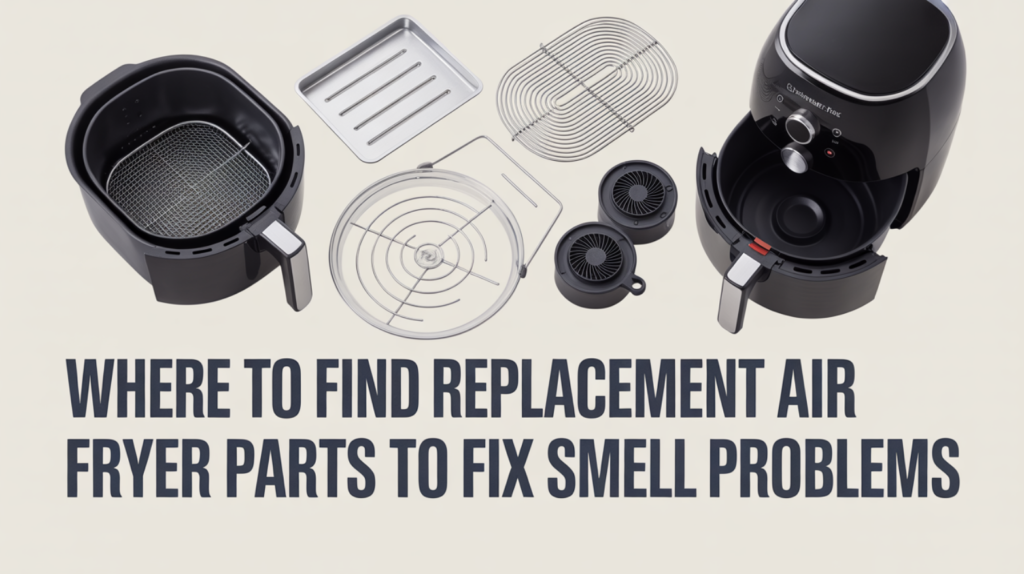
The basket or crisper plate coating
When a coating is scratched or worn, residue clings harder and burns easier. That can create a harsh smell that seems “baked into the machine,” even if you wash it every day.
Rubber or silicone bumpers, gaskets, and feet
Small rubber pieces can absorb odors over time, and they can also degrade with repeated high heat. When they age, they sometimes release a warmed “rubbery” smell that’s noticeable even across the room.
The fan area and rear vents
Airflow moves odor. If grease film collects near the fan pathway or inside vent channels, the smell can get amplified because it’s being pushed out directly toward you.
The drip tray or drawer base
Some models hide a lot of residue in the lower drawer geometry. When that residue cooks again, it can smell like something “inside the machine” is burning.
Where to find the right replacement parts
There are a few reliable paths for getting air fryer parts. The best choice depends on whether you need a food-contact part (basket, tray) or an internal component (fan, heating assembly).
Manufacturer website and official support
This is the cleanest route for fit and safety. If your air fryer is still supported, the manufacturer typically offers exact-match parts and model-specific compatibility guidance.
It’s also the best option when you’re replacing parts that touch food directly, because you’re less likely to end up with something that doesn’t tolerate heat properly.
Authorized service centers and repair partners
If your brand has service partners, they can often source parts even when the retail store pages don’t show them. This route is especially useful for internal components, because they can confirm what’s actually wrong before you spend money.
Major appliance-parts retailers (online)
Many parts sites list baskets, trays, drawers, and sometimes knobs or handles by model number. This is a solid option when the manufacturer store is out of stock, but you still want a focused catalog instead of a random listing.
Marketplace listings (use carefully)
Marketplaces can be helpful for discontinued models, but they’re also where mismatches happen most often. If you go this route, treat it like a compatibility puzzle: model number, part number, and clear photos need to line up.
This is also where you want to be extra cautious about internal electrical parts. If your smell feels “electrical,” don’t gamble, solve the source safely instead of hoping a random listing works.
Local appliance repair shops and used-part sources
Some shops keep donor units for parts, especially for popular brands. This route can be surprisingly effective when you need a drawer, handle, or basket and don’t mind a lightly used replacement.
The exact info you should collect before ordering anything
Parts searches go smoothly when you walk in with the right identifiers instead of just the brand name.
Model number and variant
The same air fryer “name” can have multiple internal versions. The label on the underside or back usually gives the model code that sellers use for matching.
Part name + a visual check
If you can, compare photos of the replacement part to your existing one. Small differences in basket rails or drawer tabs can mean the part won’t slide properly even if it “looks close.”
What the smell does (your clue)
The “when” matters. Smell during preheat points you toward heat-adjacent parts. Smell after storage points you toward trapped residue or odor-absorbing strategy, which is where simple add-ons that quietly reduce lingering odors can help while you troubleshoot.
A simple decision map for fixing odor problems with parts
You don’t need to replace half the air fryer to fix a smell. Most odor fixes come down to the smallest component that’s causing the repeat problem.
If the smell is mostly “old cooking”
Replace the basket, crisper plate, or drawer insert if they’re scratched, warped, or permanently sticky.
If the smell is “hot rubber”
Replace silicone bumpers, gaskets, or any rubber pieces that look brittle, discolored, or distorted.
If the smell is “electrical” or “heated plastic”
Stop using the unit until you’ve ruled out wiring or internal component issues. In many cases, that’s where a service partner is the safest route.
Conclusion
Replacement parts fix smell problems when the odor is coming from a component that’s holding residue, absorbing odors, or reacting to heat in a new way. The calm approach is simple: confirm the smell pattern, identify the likely part, and source replacements through the most trustworthy channel you can access.
If you want the bigger framework that connects cleaning, deodorizing, accessories, and parts into one system, start with the main air fryer odor guide and follow it step by step, because once the real source is handled, the air fryer usually returns to a neutral, clean smell that feels instantly better in your kitchen.