VOCs are gases that can evaporate from certain materials, especially when heat is involved. In an air fryer, that “new smell” often comes from tiny residues and fresh surfaces warming up for the first time, then releasing an odor that usually fades after a few proper heat cycles and a good wash.
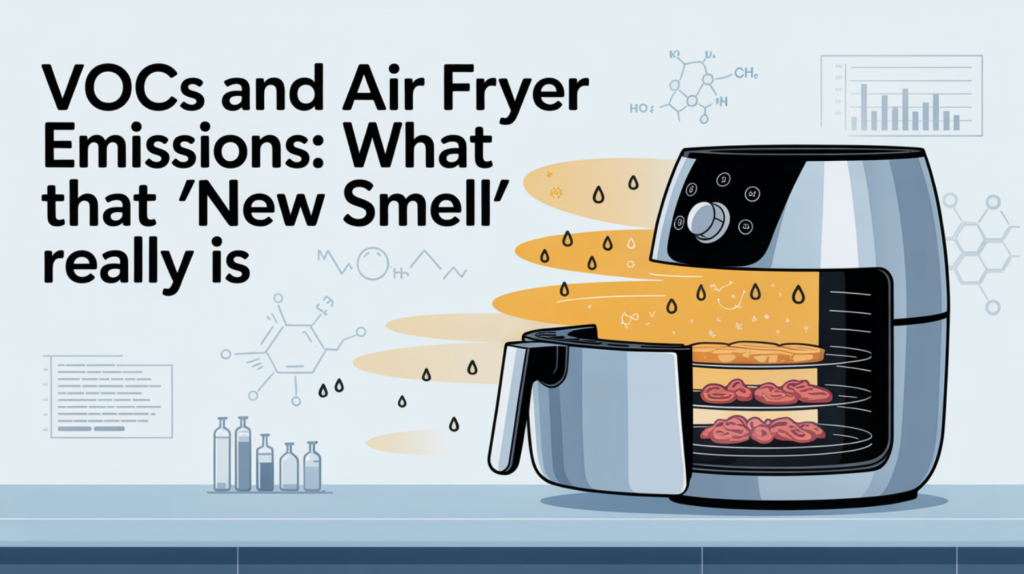
An air fryer works by heating a metal element and pushing hot air through a compact chamber. Because that chamber is small, any odor that forms inside it becomes noticeable fast. That’s why people sometimes describe a sharp, chemical-like smell and wonder whether the appliance is releasing something harmful.
A simple way to understand VOCs without the chemistry
Think of VOCs as “odor-carrying vapors” that can come from new products, coatings, adhesives, and even normal cooking fumes. Heat speeds up evaporation, so warming a brand-new appliance can make those vapors more obvious.
That does not automatically mean danger. It means your air fryer has materials that are settling into their first high-temperature runs, and your nose is doing what noses do, detecting change.
Two different smells often get confused
A lot of stress comes from mixing these up:
1) “New appliance” smell
This one tends to show up in the first few uses and then fade. It’s the same category as that typical factory smell from many new heated appliances.
If you’re dealing with this type of odor, the most relevant guide is the one that explains the new-unit odor that fades after a proper burn-in:
new air fryer plastic smell and first-use odor
2) “Reheated residue” smell
This one keeps returning because it has a fuel source, old oil mist, crumbs, or baked-on film. It often smells strongest during warm-up.
If that timing sounds familiar, you’ll recognize the pattern described in a smell that shows up only during warm-up and then eases as the unit cools:
air fryer smells when heating
Once you know which smell you have, the fix becomes much more straightforward.
What makes VOC-style odors feel stronger in an air fryer
Even if the total amount of vapor is small, three things can make it feel intense:
- Small chamber, big impact: a compact space concentrates smell
- High airflow: the fan carries odor right out toward you
- High heat early on: preheat and first minutes can amplify new-surface odors
So the smell can feel dramatic even when the underlying cause is temporary.
Practical “low-stress” steps that reduce emissions and odor
You don’t need complicated routines to calm the situation down.
Step A: Wash what touches heat and food
Warm water, mild soap, and a thorough rinse remove manufacturing dust and surface residue from the basket and tray. Dry completely before reassembling so moisture doesn’t trap odor.
Step B: Do a real burn-in (empty heat cycles)
Run the fryer empty a few times at a cooking temperature. Let it cool between cycles. This helps new surfaces finish their early heat adjustment without flavoring food.
Step C: Ventilate like you mean it
Open a window or run a kitchen fan during early cycles. Fresh air dilutes odor quickly, especially for anyone who feels headaches or irritation from strong smells.
These steps work best when you apply them early, before the smell becomes an ongoing annoyance that distracts you from cooking.
When to take the smell more seriously
Most first-use odor improves. A smell that does not improve deserves attention.
Pause and reassess if any of these happen:
- The smell gets stronger after multiple clean-and-heat cycles
- You notice smoke, melting, or visible darkening on parts
- The odor clings to food even after cleaning
- The smell feels “electrical” rather than “new” or “food-like”
At that point, it’s less about “VOCs” as a concept and more about whether the appliance is operating normally and safely.
If you want the full decision path in one place, the homepage smell-fix hub walks through the smell types and what each one usually means:
Why Does My Air Fryer Smell?
A calmer way to think about it
VOCs are not a single villain, and “VOC” does not automatically mean “toxic cloud.” It’s a label for vapors that can come from many everyday sources, new products, heated surfaces, and normal cooking.
In an air fryer, the most common reality is simple: early heat cycles release temporary odor, and basic cleaning plus ventilation usually resolves it. When the smell keeps escalating or comes with visible warning signs, that’s when you treat it as a safety issue rather than a nuisance.