Kitchen smells spread for one simple reason: air moves. Once cooking vapors rise, they follow pressure, heat, and airflow paths through your home, into hallways, curtains, sofas, and sometimes even bedrooms. If you can control the air path, you can control the smell path.
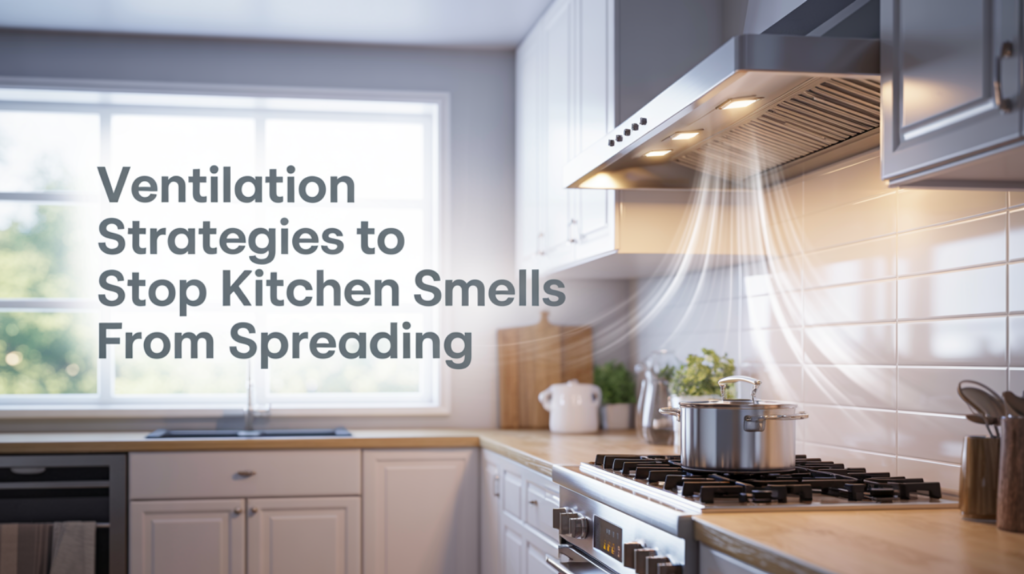
Ventilation isn’t only “turn on a fan.” It’s a practical way to guide airborne odor molecules out of your living space before they settle and linger.
What makes smells travel so far
Cooking creates a warm plume of air. Warm air rises, and as it rises it carries odor particles with it. At the same time, your home naturally creates air currents because:
- doors open and close, changing pressure,
- ceiling fans push air into adjacent rooms,
- HVAC systems pull air through returns,
- and temperature differences create drafts.
So the real goal is not to “erase” odors in the kitchen. The goal is to move them outside quickly and stop them from drifting into soft surfaces.
Start with the easiest win: give air one clear exit
If the kitchen has no exit path, odors spread sideways. If the kitchen has a strong exit path, odors prefer that route.
A simple setup that works in most homes:
- Open a window or door near the kitchen (even slightly).
- Turn on the exhaust fan if you have one.
- Keep interior doors partially closed so the smell doesn’t wander freely.
This creates a “direction” for air, and smells follow direction.
Exhaust fan strategy (range hood or wall exhaust)
If you have a range hood or kitchen exhaust, the timing matters as much as the power.
Turn it on early, not late
Odor particles become harder to remove once they spread. Starting ventilation early catches the smell while it’s still concentrated near the cooking zone.
Use the right fan speed for the right food
- Light foods (toast, fries, nuggets): low to medium often works.
- Strong foods (fish, garlic, spicy marinades): medium to high prevents spread.
- High smoke risk foods: high speed helps keep irritation down.
Keep the fan running after cooking
The smell doesn’t stop when the air fryer stops. Residual vapors keep drifting for a while, especially if the basket is still hot. A short post-cook run clears that “after-cloud.”
The “cross-breeze” trick for fast odor removal
A cross-breeze is one of the strongest odor controls you can create without equipment.
Here’s how to do it:
- Open one window close to the kitchen.
- Open another window in a different room (or a door to the outside).
- Keep the path between them as straight as possible.
This creates a gentle pull that carries cooking air out instead of letting it drift into furniture and fabric.
Cross-breeze matters even more in small homes, because air exchanges happen quickly, and smells can reach every corner before you even notice.
Use the air fryer placement like a ventilation tool
Where you place the air fryer changes how smells spread.
Place it closer to an exit route
If your air fryer sits under an exhaust fan or near a window, odors have a shorter distance to travel before they leave the home.
Keep it away from hallway “funnels”
Many kitchens connect to a hallway that acts like a tunnel. When the fan blows, it can push smells straight down that corridor. A simple reposition can prevent that.
Avoid cooking directly under ceiling fans
Ceiling fans are great for comfort, but they can grab kitchen odors and distribute them like a broadcast system across the house.
Control the “odor magnets” in your home
Even with good airflow, smells linger when they land on absorbent surfaces.
Common odor magnets include:
- curtains,
- couch fabric,
- dish towels,
- rugs near the kitchen,
- and open laundry baskets.
Reducing spread isn’t only about air movement, it’s also about preventing odor from “parking” itself inside fabrics.
A simple trick is to keep kitchen textiles clean and dry, because damp cloth holds odor longer and releases it slowly over hours.
What to do when the smell feels unusually strong
Sometimes a smell is not just “food smell.” Sometimes it’s a sign that something is overheating or burning residue is reactivating.
If the odor is sharp, bitter, or chemical-like, it can help to check whether you’re dealing with residue buildup or a more serious heat issue. In those cases, it’s useful to compare the smell type to safety clues, because the air fryer can produce warning odors when certain scents signal overheating instead of normal cooking vapor.
Combine ventilation with maintenance for the cleanest result
Ventilation controls where smells go. Maintenance reduces how many smells are created in the first place.
If your air fryer repeatedly fills the kitchen with a stale, oily smell, even when you ventilate well, that usually means old grease is reheating. The fix is not more airflow alone. It’s cleaning the places that hold onto odor and release it each time heat cycles.
A practical step is to remove the residue that hides in corners and heated surfaces, because lingering food odors often return when you don’t wash the areas that repeatedly bake oil into smell.
Advanced ventilation moves for stubborn kitchen smells
If you want stronger control, these tactics help:
Create a “kitchen-only airflow zone”
- Close doors to bedrooms.
- Keep the kitchen door partially closed if you have one.
- Let air leave through a kitchen window.
This turns the kitchen into a controlled space instead of an open odor highway.
Use bathroom exhaust fans as helpers
Bathroom exhaust fans can pull air out of the home, which increases overall air exchange. If your kitchen lacks a strong exhaust, a nearby bathroom fan can assist with removing odor from the house.
Run HVAC thoughtfully
If your HVAC return is near the kitchen, it can pull cooking smells into the system and redistribute them. During strong-smell cooking, reducing circulation (when practical) can keep odors from spreading through vents.
Conclusion: stop smells by controlling the air route
Kitchen odors spread when air has no better path than your living space. Once you create a clear exit route, with exhaust, a cross-breeze, and smart placement, smells become easier to manage and faster to remove.
When airflow moves out, your home stays calmer, fresher, and more comfortable. And when you pair that airflow with clean cooking surfaces, the kitchen stops holding onto yesterday’s meals and starts feeling clean again.