Persistent air fryer smells happen when food oils and proteins settle into hidden surfaces, then release odor again the next time heat and airflow pass over them. Once you remove the trapped residue and dry the fryer fully, the smell usually disappears, and stays gone.
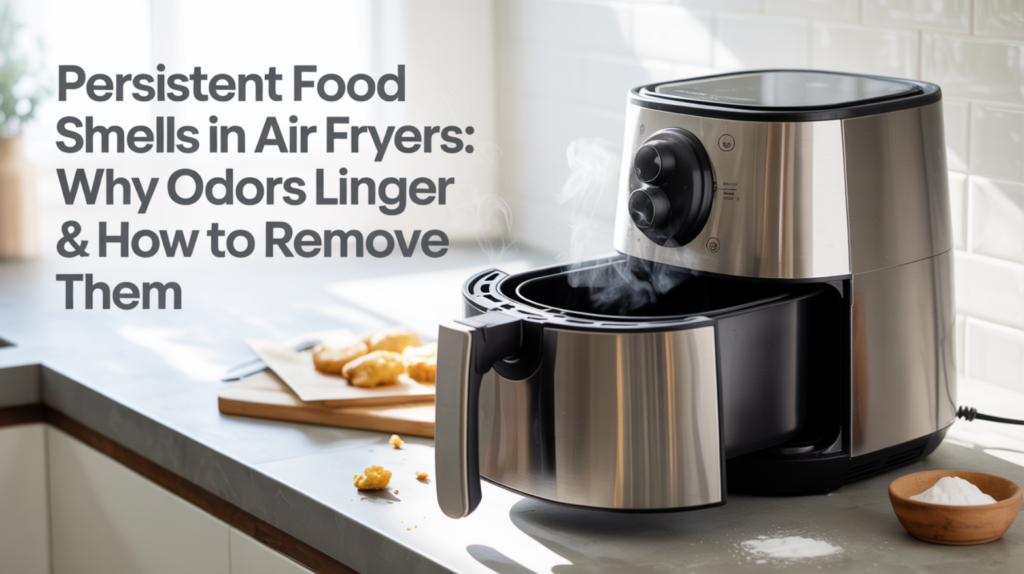
An air fryer cooks by moving hot air across food, then pushing that same air across the basket, the drawer area, and the upper heating zone. When that airflow carries fine grease particles, those particles stick to surfaces. After that, the residue becomes the “odor source,” and each new heating cycle reactivates it.
If you’ve ever cooked fish one day and smelled it again during fries the next, you’ve already seen this pattern in action.
Why smells linger even after you “cleaned it”
A quick rinse removes visible mess, but odor usually lives where you don’t see it.
Grease behaves like a thin film.
That film traps scent molecules.
Heat softens the film.
Airflow spreads the scent again.
So the smell isn’t “stuck in the food.” The smell is stuck in the fryer’s residue layer, especially in corners, mesh areas, seams, and the path where hot air circulates.
That’s also why the odor feels stronger right as the unit warms up, heat wakes up the residue and the fan carries it outward.
The three places odors hide most often
Instead of guessing, target the most common odor zones.
1) Basket mesh and tray edges
These areas catch grease and protein splatter. Over time, the film becomes sticky, then the smell becomes persistent.
2) Drawer rails and lower chamber corners
Oil mist drifts down and settles in places you don’t scrub during a fast wash.
3) Upper heat zone (indirect residue)
You don’t need to touch the heating element to have odor there. Airflow can deposit a thin layer nearby, and that layer can smell “old” when heated.
If your fryer has ever developed a smell that seems to return no matter what you do, it often connects to the same buildup described in cooking residue that creates odor by reheating and releasing a lingering aroma.
Why fish, chicken, and bacon are the worst offenders
Some foods leave a stronger “signature” because of what they release:
- Fish oils carry intense compounds that cling to surfaces
- Chicken drippings contain proteins that bake onto mesh and corners
- Bacon grease spreads easily and coats the chamber like a thin varnish
These residues don’t just smell once. They keep smelling because they keep reheating.
If the lingering odor feels sharp and chemical rather than “food-like,” that’s a different scenario, and it matches cases where new materials release a plastic-like odor during early high-heat cycles.
A practical odor reset that works
This routine aims to remove the residue layer rather than mask it.
Step A – Clean for residue, not appearance
Wash the basket and tray thoroughly with warm water and mild soap. Focus on seams, mesh, and edges. If the surface still feels slick after washing, the odor source is still there.
Step B – Dry like it matters
Odor clings more stubbornly when moisture is present. Drying fully prevents smells from “settling” back into the chamber.
Step C – Deodorize with heat + airflow
Once clean and dry, an empty heat cycle helps lift remaining odor compounds. This step doesn’t replace cleaning, it finishes what cleaning started.
If you want a deeper “odor removal” routine that targets stubborn smells, follow the method that shows how to stop air fryer smell problems at the source by matching the odor to the correct fix on the homepage guide.
How to prevent persistent smells from returning
Odor prevention is mostly about stopping grease from turning into a permanent film.
- Clean after oily meals instead of letting residue harden overnight
- Avoid overcrowding (overcrowding increases grease mist and reduces airflow)
- Store the fryer with airflow (a slightly open drawer helps the chamber breathe)
- Run a quick empty heat cycle occasionally after heavy cooking days
These small habits keep the fryer smelling neutral, so your food tastes like food, not yesterday’s dinner.
Final thoughts
Persistent food smells in air fryers come from residue that hides in the airflow path and reactivates with heat. Once you remove that residue layer, dry the unit fully, and let airflow do its job, the smell usually fades quickly and stays gone.
An air fryer is meant to circulate clean hot air, not recycled odor. When the internal surfaces stay clean and dry, the appliance returns to what it should feel like, fresh, reliable, and ready for the next meal.