Air fryer smells don’t usually “float in” from nowhere. They build up because warm grease clings to surfaces, tiny crumbs get toasted again and again, and the drawer becomes a small odor chamber every time you shut it.
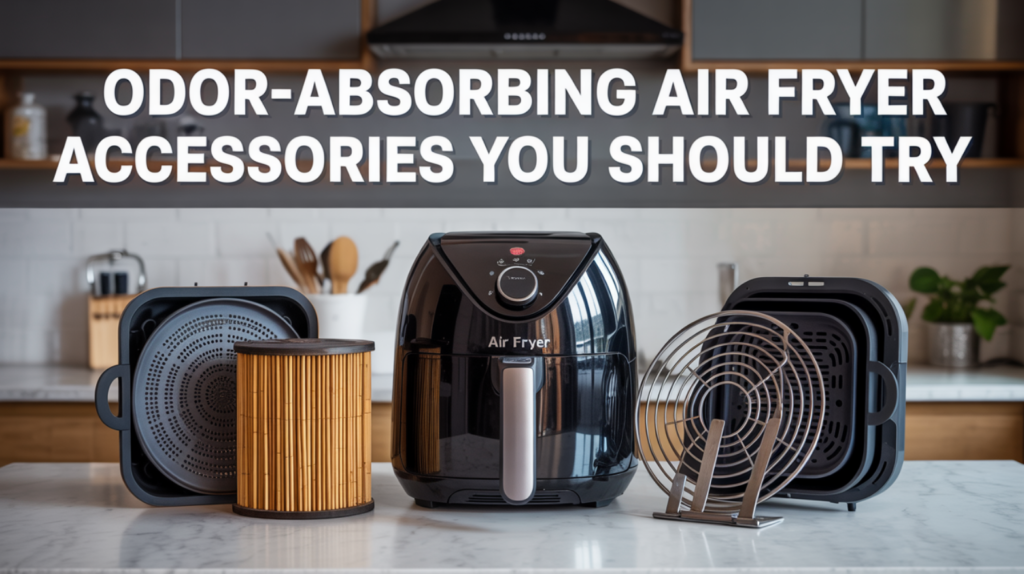
That’s why the most useful accessories are the ones that either catch residue before it bakes on or absorb lingering odor after cooking. When you pair those tools with a calm routine from the complete air fryer odor guide, the appliance stops feeling like a smell trap and starts feeling clean again.
Start with the accessory that matches where the smell is coming from
If the odor is strongest while cooking, you want something that reduces smoke and grease aerosols. If it’s strongest when you open the drawer later, you want something that absorbs trapped smell during storage.
If the smell happens during cooking
Look for accessories that reduce splatter and keep drips from burning.
If the smell hits you after cooking or the next day
Focus on accessories that absorb odor in the air fryer’s storage space.
Inside-the-basket accessories that prevent odor buildup
These don’t “freshen” the air. Instead, they reduce the sticky layer that turns yesterday’s meal into today’s smell.
Raised rack or crisper plate upgrades (less greasy contact, less reheated odor)
When food sits directly in grease, that grease heats repeatedly and starts to smell heavier over time. A raised rack or a well-vented crisper plate keeps food lifted, so drippings collect below instead of coating everything.
That separation matters because fewer baked-on oils means fewer stubborn smells later, and cleanup becomes quicker instead of stressful.
Reusable air fryer liners (useful, but only the right kind)
A liner can help because it catches drips before they carbonize on the basket. The best ones have ridges or channels that still allow airflow, since airflow keeps food crisp and helps avoid soggy, steamy odors.
This is also where people accidentally create more smell than they remove. If a liner blocks vents and traps grease pools, those pools can overheat and leave a stronger “old oil” scent behind.
Mesh splatter screen or silicone splatter guard (for fatty foods)
Some odors are basically airborne grease. When that mist lands on the heating area and inner walls, it becomes a thin film that smells every time the unit warms up.
A splatter guard reduces that mist, which means fewer greasy deposits and a fresher-smelling fryer over the long run.
Around-the-air-fryer odor absorbers that actually help
These accessories work best when they sit near the air fryer, not inside it. They quietly absorb lingering smells after cooking without perfuming your food.
Activated charcoal bags (best for “kitchen air” odors)
Activated charcoal absorbs odor molecules from the surrounding air. It’s especially helpful after fish, frozen snacks, or anything that leaves that “fried air” feeling in the room.
Place it near the appliance where air moves, and let it do the slow, steady work while you enjoy the fact that the kitchen doesn’t smell like yesterday’s dinner.
Zeolite odor absorbers (best for cabinet storage smells)
Zeolite is great when the worst odor shows up the moment you open the drawer or cabinet. Closed storage traps smells, and trapped smells intensify.
A small zeolite deodorizer placed in the same cabinet or on the same shelf helps prevent that stale “closed drawer” punch the next time you cook.
Storage habits + accessories that stop the “odor chamber” effect
Sometimes the accessory is simple: it changes how the air fryer dries and how smells escape.
A drying stand or airflow-friendly storage setup
If the basket goes back in slightly damp, moisture holds odor in place and makes it smell older than it is. Giving parts a way to air-dry fully is one of those small changes that feels surprisingly satisfying.
This is where gentle routines help too, especially when you follow steps that lift odor without harsh chemicals and keep surfaces from turning sticky.
What to avoid (even if it sounds like a “deodorizer”)
Some odor products belong in closets, not near hot appliances or food.
Scented gels and strong fragrance pods
They can mask odor, but they also risk making your food smell oddly perfumed, which is the opposite of what most people want from an air fryer.
Anything that goes inside the fryer that isn’t meant for heat + food contact
If it’s not designed for high heat and food-safe use, it doesn’t belong in the basket or drawer. Odor control should make cooking feel cleaner, not risky.
A simple “starter set” that covers most odor problems
You don’t need ten gadgets. You need a few that solve different parts of the same problem.
The practical combo
- A vented liner or rack to reduce baked-on grease
- A splatter solution for fatty foods
- A charcoal bag or zeolite absorber for lingering smells after cooking
This mix works because it prevents the smell source, reduces greasy deposits, and then absorbs what’s left in the air.
Conclusion
Odor-absorbing accessories work best when they’re treated like quiet helpers, not magic fixes. A liner or rack reduces the residue that turns into smell, and charcoal or zeolite absorbs the leftover odor that lingers in air and storage.
When you choose accessories based on where the odor shows up, your air fryer starts smelling neutral again, and that clean, calm feeling in the kitchen becomes the new normal.