Lingering air fryer odor is usually not “mystery smell.” It’s trapped residue. Even a clean-looking basket can hold a thin, invisible layer of oil that reheats and releases yesterday’s flavors into today’s food. Once you understand that smell is simply leftover cooking compounds being warmed again, the solution becomes straightforward: remove what’s holding them.
This guide shows a thorough, practical cleaning method that targets the spots most people miss, so your air fryer stops smelling like old garlic, fish, or burnt grease the moment it heats up.
What “odor residue” looks like in real life
Odor residue isn’t always chunky or obvious. Often it’s:
- a sticky oil film you only notice when you rub a finger across metal,
- a dusty spice layer trapped in mesh,
- caramelized drips near hot zones,
- or crumbs hiding where the tray meets the basket.
Those layers act like a scent storage system. Heat activates them, airflow spreads them, and the kitchen smells “heavy” again.
Before you clean: safety first, then setup
- Unplug the air fryer.
- Let it cool completely.
- Move it to a well-lit area near a sink or countertop you can wipe.
This matters because thorough cleaning often involves turning the unit, inspecting edges, and wiping interior surfaces carefully.
Tools that work without damaging anything
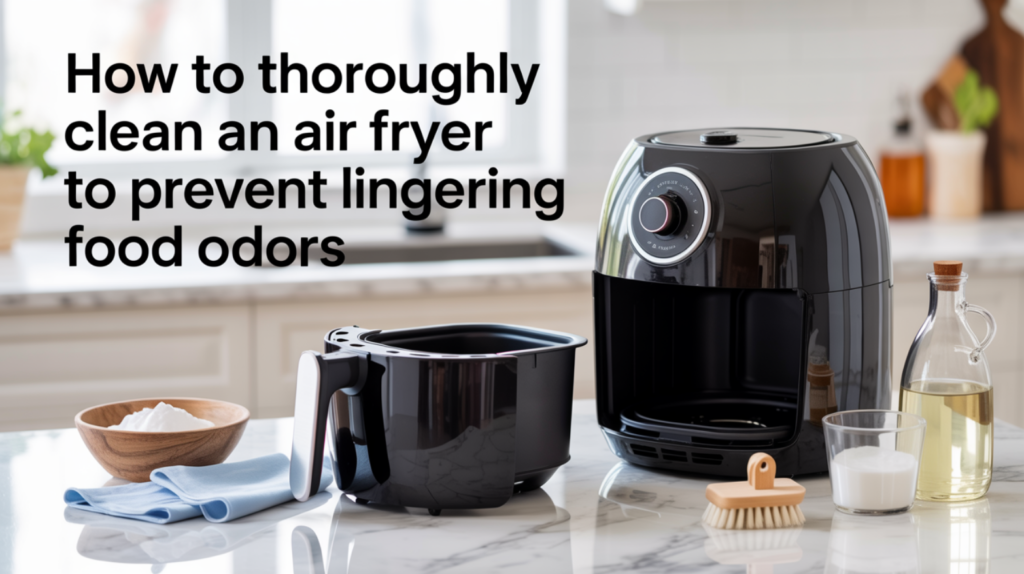
You don’t need harsh chemicals. In most cases, these are enough:
- mild dish soap
- warm water
- a soft sponge (non-abrasive)
- a soft brush (for mesh and corners)
- microfiber cloths or paper towels
- baking soda (for stubborn odor film)
- a wooden toothpick or soft tool for tight creases (no metal scraping)
Avoid aggressive scouring pads because scratches can trap residue and make odor problems worse over time.
Step 1: Disassemble and de-grease the “food zone”
Remove the basket, tray, and any insert. Then do this:
Wash with warm soapy water, but slow down at the corners
Corners and seams are where oil thickens. Work soap into those edges, because that’s where smell tends to “live.”
Check the underside of the tray
The underside is one of the biggest hidden odor sources. Oil drips, warms, bakes, and stays there like a scent stain.
Rinse well and set parts aside to dry.
Step 2: Break the invisible oil film (this is the real odor fix)
If your air fryer still smells after “normal washing,” it’s usually because the oil film was not fully removed.
Make a simple paste:
- 2 tablespoons baking soda
- a little warm water (just enough to make a spreadable paste)
Apply it lightly to:
- basket mesh,
- tray surface,
- corners where residue clings.
Let it sit for 10–15 minutes, then scrub gently with a soft sponge or brush.
This works because baking soda helps lift odor-holding compounds without harsh fumes.
Step 3: Clean the interior walls of the air fryer body
Here’s where most people stop, and that’s why the smell returns.
Wipe the interior with a damp soapy cloth
The inside walls catch oil mist over time. That mist becomes a thin layer that reheats and produces a “stale fryer” smell even when the basket is spotless.
Wipe:
- side walls,
- back wall,
- bottom surface (where crumbs can slide).
Use a barely damp cloth, not dripping wet.
Follow with a plain damp wipe, then dry wipe
Soap left behind can hold odor too. A final clean-water wipe plus a dry wipe removes residue fully.
Step 4: Carefully address the heating area (without soaking the machine)
The heating element area can hold splatter and carbonized dust. That carbonized layer can create that sharp, burnt smell that feels stronger than the food you’re cooking.
With the unit unplugged and cool:
- Use a soft brush or dry cloth to loosen debris.
- Use a slightly damp cloth to wipe reachable areas.
- Never pour water into the unit.
If you see stubborn baked spots near hot zones, use a damp cloth with a tiny bit of soap, then wipe again with plain water and dry.
If you’re seeing harsh smells that feel more intense than “food,” it’s worth checking whether the odor is just residue or a warning sign, because some smells become concerning when they suggest overheating rather than normal cooking vapor.
Step 5: Remove the “edge grime” that traps odors
This step sounds small, but it changes everything.
Focus on:
- rim edges where the basket slides in,
- rubber bumpers,
- grooves and rails,
- the basket handle base.
These areas collect grease from repeated handling, and that grease warms up during cooking, releasing a faint but persistent odor.
A soft cloth with soapy water works well. Use a toothpick wrapped in a cloth for tight seams.
Step 6: Drying matters more than most people realize
A clean air fryer that stays damp can develop a sour smell, especially if it’s closed while still humid.
Do this instead:
- air-dry parts fully,
- towel-dry the unit interior gently,
- leave the basket out for a while before reassembling.
Dry surfaces don’t trap odor as easily as oily or damp surfaces.
Step 7: The “neutral reset” run (optional, but useful)
Once everything is clean and dry, you can run the air fryer empty for a short cycle to burn off any remaining moisture and confirm the smell is gone.
Keep ventilation on, because even a clean unit can release a brief “warm metal” scent during a reset.
If your home tends to hold onto cooking smells even after cleaning, airflow strategy helps a lot, because odor is harder to manage when it spreads into fabrics and hallways. A simple approach is to set up ventilation that pushes odor out before it travels.
How often should you do a thorough clean like this?
It depends on what you cook:
- Light foods (fries, nuggets): thorough clean every 2–4 weeks
- Oily foods (wings, bacon): every 1–2 weeks
- Strong odor foods (fish, garlic-heavy meals): deeper clean sooner if smell lingers
The “right” schedule is the one that prevents the smell from ever becoming normal.
Conclusion: the real reason thorough cleaning works
An air fryer doesn’t hold smells because it’s broken. It holds smells because heat and airflow keep reactivating whatever residue was left behind. Once you remove the oil film, clear the hidden crumbs, and wipe the interior surfaces that catch mist, the odor has nothing left to cling to.
After a true deep clean, your air fryer should smell like nothing when it’s empty, and only smell like food while you’re cooking. And that’s exactly how it should be.