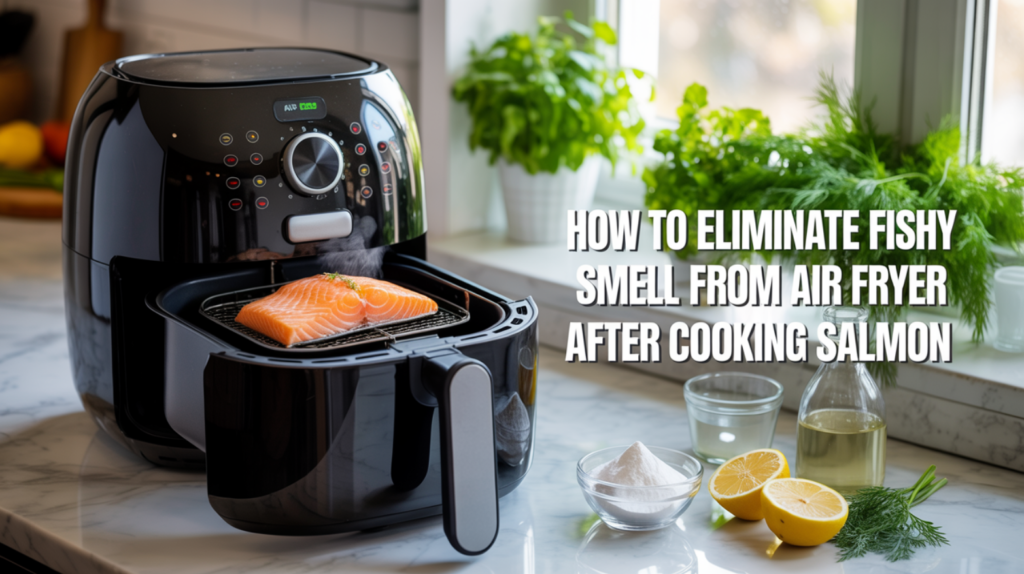
If your air fryer smells “fishy” after salmon, it’s usually because salmon oils and tiny protein droplets have settled onto warm surfaces inside the basket, drawer, and sometimes the splatter area near the heating element. Those residues hold odor molecules, and the next time heat runs through the machine, the smell wakes back up. The good news is that the odor is removable once you break up the grease, rinse away the film, and finish with a gentle deodorizing cycle.
When you’re ready to go deeper, the air fryer smell section on this complete air fryer odor guide helps you match the right fix to the exact smell you’re dealing with.
Why Salmon Odor Sticks Around in an Air Fryer
Salmon releases natural oils as it cooks, and those oils can mist into the air fryer’s hot airflow. That warm airflow pushes the oily vapor onto the basket walls and the drawer below, and that thin coating can cling even after the air fryer “looks” clean.
Because the coating is greasy, plain water alone struggles to lift it. That’s why the smell often lingers until you use a grease-cutting wash followed by a deodorizing step.
What to Do Immediately After Cooking Salmon
The fastest way to prevent a lingering smell is to act while the air fryer is still warm (not hot).
- Let it cool for 10–15 minutes, then wipe the basket and drawer. A quick wipe removes the fresh oil film before it settles and thickens.
- Pull out the basket and drawer and separate the parts. Odor hides in seams, corners, and any mesh or crisper plate.
- Dispose of any parchment liner or foil. Old liners keep the odor trapped and can make the air fryer smell “fishy” again even after cleaning.
The Best Deep-Clean Method for Fishy Air Fryer Smell
This method works because it attacks the odor from two sides: grease removal first, then odor neutralizing second.
Step 1: Soak the Basket and Drawer to Loosen the Oil Film
- Fill your sink with hot, soapy water (comfortably hot, not boiling).
- Soak the basket, crisper plate, and drawer for 10–20 minutes.
- Use a soft sponge to scrub, especially around corners and mesh.
If the smell has been there for days, a gentle baking soda scrub can help lift the sticky layer—this approach is explained in the baking soda odor absorption method for air fryers.
Step 2: De-grease the “Hidden” Areas Where Odor Clings
After the removable parts are soaking, focus on the places that quietly hold fish odor:
- Basket rim and latch areas (oil gathers where parts touch)
- Drawer rails (thin greasy lines build up here)
- Interior walls (especially near the back where airflow hits)
Use a damp cloth with a drop of dish soap, then wipe again with a clean damp cloth so no soap film remains.
Step 3: Gently Wipe the Splatter Area Near the Heating Element
Fish smell can cling to tiny splatters above the basket. Once the unit is fully unplugged and cooled:
- Tilt the air fryer (if your model allows safe access)
- Wipe visible splatter with a damp cloth (not dripping wet)
- Avoid soaking the top or letting water run into the machine
This step matters because even a small splatter can re-release odor when heated.
Finish With a Simple Deodorizing Cycle
Once the grease is gone, a short deodorizing cycle helps clear the last traces of odor from airflow paths.
A reliable option is a small heat-safe dish with lemon and a little vinegar, which you can run briefly to freshen the interior. If you want the exact ratios and timing, follow the lemon water deodorizing technique for persistent fryer odors and then air the fryer out for a few minutes afterward.
After that cycle, leave the basket and drawer out on the counter for 15–30 minutes so the air fryer can fully breathe.
Overnight Odor Absorbers That Actually Help
If the smell is still faintly present, you can “park” an odor absorber inside the cooled air fryer overnight:
- A small bowl of baking soda (dry, not mixed)
- Activated charcoal (excellent for stubborn odors)
- Dry coffee grounds (good for masking and absorbing)
These work best when the air fryer is clean first. If grease remains, the odor absorber has to fight through that oily film, and it won’t win.
How to Prevent Salmon Smell Next Time
A little prevention saves you from having to deep clean every time you cook fish.
- Pat salmon dry before cooking. Less surface moisture means fewer odor-carrying droplets.
- Use a liner correctly. A liner can reduce drips, but keep airflow clear so it doesn’t blow into the heating area.
- Cook at the lowest effective temperature. Higher heat can aerosolize more oil, which spreads odor farther.
- Clean right after cooking. Odor becomes “sticky” as it cools and settles.
When the Smell Means You Missed Something
If your air fryer still smells fishy after cleaning, it usually means one of these is true:
- A thin grease layer is still on the basket walls or drawer corners
- The splatter area near the top still has residue
- The unit wasn’t fully dried, and damp residue is holding odor longer
In that case, repeat the wipe-down and deodorizing cycle once more, then let the air fryer air out with the basket removed.
Conclusion
A fishy smell after salmon isn’t mysterious, and it isn’t permanent. It’s simply the natural oils from fish bonding to warm air fryer surfaces, and heat keeps reactivating that leftover film until it’s fully removed. Once you wash away the grease, wipe the hidden odor zones, and finish with a gentle deodorizing cycle, the air fryer returns to a neutral, clean smell that won’t hijack your next meal.