Lent cooking often means frying fish more frequently, and that can make your air fryer (and sometimes the whole kitchen) carry a familiar seafood scent that feels like it never fully leaves. The reason is simple: hot fish oil releases odor molecules into moving air, and that air deposits a thin film inside the fryer. Once the film exists, every new heat cycle can “wake it up,” even on days you’re cooking something completely different.
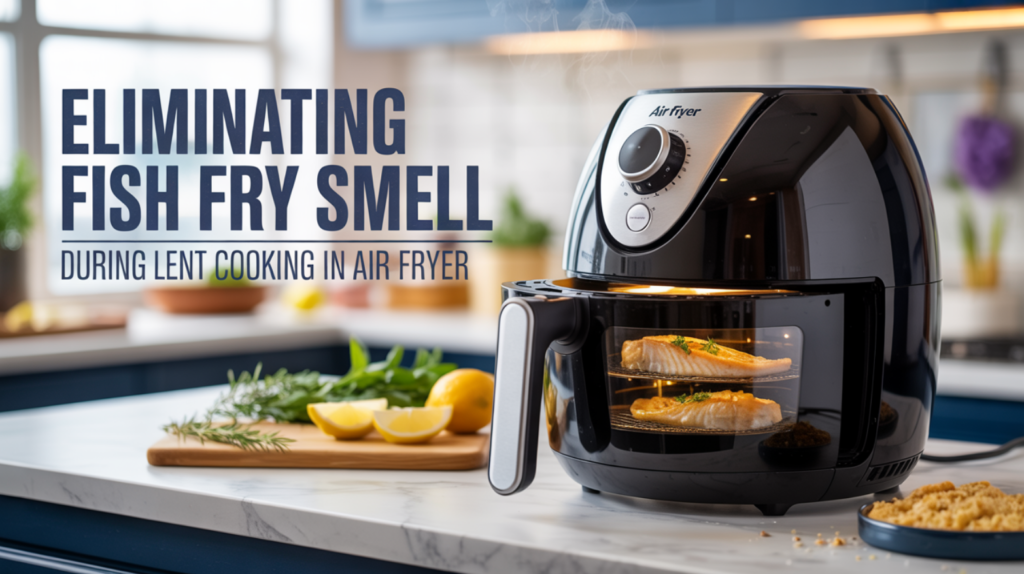
This is a normal outcome of cooking fish in a compact convection appliance, not a sign that anything is wrong. If you’re building your full smell-removal system, you’ll find the central resource at the complete air fryer odor and cleaning hub.
Why Fish Fry Smell Spreads More During Lent
During Lent, people often cook fish in batches across multiple days. That routine matters because smell build-up is a layering problem.
Each fish cook can add:
- a little oil mist on the basket wall
- a thin line of grease along the drawer edge
- a small amount of splatter near the upper cavity
One session might not be noticeable. Three sessions in a week can make the smell feel “embedded,” because the odor film has been reinforced repeatedly.
The Two Things That Create the Strongest Fish Fry Odor
1) Hot oil + airflow
Air fryers move air aggressively. That airflow lifts fish oils, carries them, and distributes them across interior surfaces.
2) Seasoning compounds
Fish fries often include garlic, chili, pepper, masala blends, or marinades. Those aromas are delicious on the plate, but when they hit hot surfaces, they linger longer than plain fish.
So the real target isn’t “fish smell” in the air. The target is the residue that smell sticks to.
A Lent-Friendly Routine That Keeps Smell Under Control
This routine is designed for frequency. It keeps odor from building up without turning your day into a cleaning day.
After each fish cook (5-minute reset)
- Let the fryer cool until it’s warm.
- Remove the basket and dump crumbs immediately.
- Wipe the basket walls and drawer floor with a paper towel or cloth.
- Leave the drawer slightly open for 10 minutes so trapped odor can escape.
That simple air-out step is surprisingly powerful because seafood odor becomes stronger when it’s stored in a closed, warm space.
Every 2-3 fish sessions (proper wash)
Soak the basket, drawer, and insert in hot soapy water for 15–20 minutes, then scrub seams and corners.
If you want a no-drama deep-clean that removes “stuck smells” from the basket mesh and edges, follow the method shown in this basket-cleaning routine for stubborn odor.
Once a week during Lent (odor neutralization)
After the wash, finish with a gentle deodorizing step that refreshes airflow channels.
Many people prefer natural options during Lent, so if you want a method that avoids harsh chemicals while still being effective, the approach in this natural deodorizing guide fits well.
Keep the Smell From Taking Over the Kitchen
Fish fry odor isn’t only an appliance issue. It’s also a ventilation issue. When fish oils become airborne, they can spread and settle in the room.
Small placement and airflow choices reduce that dramatically:
- cook near a window when possible
- run a hood fan or exhaust fan
- keep the air fryer away from curtains and soft fabrics
- avoid storing the fryer immediately after cooking
If you want practical ventilation tactics that are easy to apply during daily cooking, those ideas are organized in this guide to stopping smells from spreading.
What Not to Do (Because It Makes Fish Smell Worse)
- Don’t store the air fryer closed while it’s still warm.
- Don’t “mask” the smell with perfume sprays near the appliance.
- Don’t skip wiping the drawer rails and rim area if you’re cooking fish often.
- Don’t reuse oily liners that already smell like fish.
Masking often mixes fish odor with fragrance, and that combination can feel even more unpleasant than the original smell.
A Simple Prevention Upgrade That Works Immediately
If you cook fish often during Lent, one small habit changes everything:
Clean while the residue is fresh, not after it hardens.
Fresh oil wipes away easily. Aged oil becomes a thin varnish. That varnish is what keeps reactivating.
So even if you don’t fully wash every time, a quick wipe and air-out after each fish fry session blocks the smell from accumulating.
Conclusion
Fish fry smell during Lent isn’t permanent, and it isn’t a failure of your air fryer. It’s simply the natural oils and seasonings from frequent fish cooking bonding to warm surfaces and returning when heat and airflow move through the fryer again. When you use a light after-cook wipe, a regular hot-soapy wash, and a weekly gentle deodorizing reset, the smell stays controlled, and your air fryer stays ready for the next meal without carrying yesterday’s seafood into it.