A burnt plastic smell from an air fryer usually forms when internal components overheat, melt, or degrade under excessive temperature. This type of odor is stronger, sharper, and more concerning than normal first-use smell.
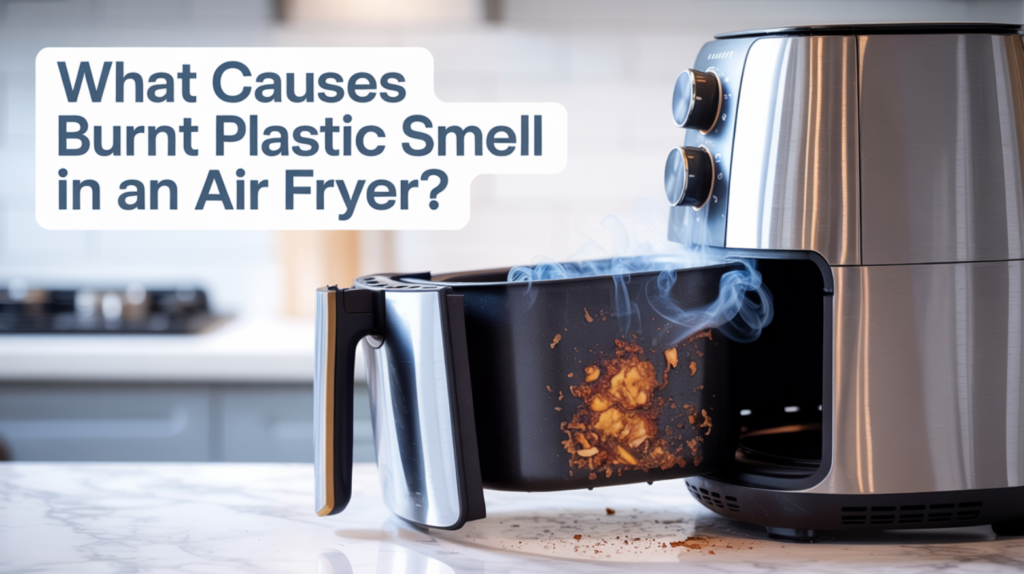
An air fryer is an electrical cooking appliance that combines heating elements, coated metal surfaces, wiring insulation, and airflow channels. When any of these components experience abnormal heat stress, they can release chemical vapors that the nose identifies as burnt plastic. This reaction explains why the smell feels harsher and more alarming than ordinary cooking odors.
Why Burnt Plastic Smell Develops
Excessive heat causes synthetic materials to break down.
When breakdown occurs, compounds vaporize and circulate inside the fryer.
That circulation spreads the smell quickly and makes it difficult to ignore.
This process often begins when grease, food residue, or airflow blockage forces the heating element to run hotter than intended. As internal temperature rises, surrounding insulation and surface coatings experience thermal stress, and that stress releases the distinctive burnt odor.
In some cases, the air fryer may also produce a sharp chemical odor during early use because new internal materials are reacting to heat, but a true burnt plastic smell indicates ongoing overheating rather than temporary off-gassing.
Common Triggers That Create Burnt Plastic Odor
Several conditions increase the likelihood of this smell forming:
- Blocked ventilation channels that trap heat
- Grease accumulation on heating surfaces
- Crumbs or oil contacting the heating element
- Electrical wiring exposed to prolonged high temperature
- Manufacturing defects in insulation or coatings
Each of these factors increases internal temperature.
Higher temperature accelerates material degradation.
Degradation releases chemical vapors.
Those vapors create the burnt plastic smell.
Is Burnt Plastic Smell Dangerous?
Yes, this odor should always be treated seriously.
When internal materials degrade, harmful compounds may enter the airflow.
Breathing these fumes is unhealthy, and continued operation increases risk of fire or electrical failure.
At this point, the safest response is to stop using the appliance and evaluate whether it remains safe. Many users discover that the air fryer becomes unsafe precisely when heat-related smell patterns reveal that internal systems are no longer functioning normally and corrective steps must be taken immediately.
How to Stop Burnt Plastic Smell Safely
First, disconnect the appliance and allow it to cool completely.
Cooling stabilizes internal components and prevents further breakdown.
Next, inspect the fryer carefully:
- Remove the basket and tray
- Check for melted residue or darkened spots
- Look for grease buildup near the heating element
- Examine vents for obstruction
If residue or grease appears, thorough cleaning may resolve the problem.
If melting, discoloration, or insulation damage is visible, the unit should not be used again.
After addressing visible residue, users can often reduce lingering odor by following the method that explains how to eliminate stubborn smells that remain trapped inside the fryer after heat-related incidents.
Why Burnt Plastic Smell Should Never Be Ignored
Unlike normal new-appliance odor, burnt plastic smell signals ongoing damage.
Ongoing damage weakens components.
Weakened components increase fire and electrical risks.
An air fryer is designed to operate within precise thermal limits.
Once those limits are exceeded repeatedly, safe performance can no longer be guaranteed.
Final Thoughts
A burnt plastic smell forms when internal air fryer components overheat and degrade.
This condition is not part of normal operation and requires immediate attention.
An air fryer remains safe only when its heating system, insulation, and airflow channels operate within their designed temperature range.
When that balance breaks, the smell becomes a warning signal that should never be ignored.