When an air fryer smells only while it’s heating, the odor is usually coming from something that reacts to high temperature, either first-use materials warming up or residue that starts to bake and smoke as the unit gets hot. The timing of the smell is the clue that helps you fix it fast.
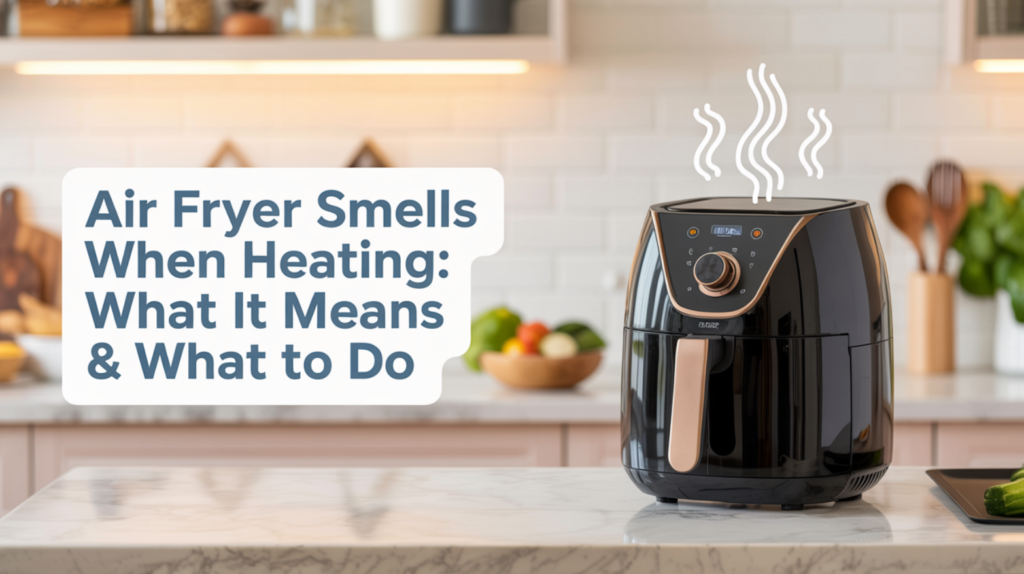
An air fryer heats a coil, pushes hot air through a compact chamber, and circulates that air around food and surfaces. Heat changes what’s on those surfaces, and the airflow carries the result straight to your nose. That cause-and-effect is why the smell can feel sudden and intense during preheat or the first few minutes of cooking.
What the “only when heating” pattern is telling you
Smell that appears during warm-up usually points to a heat-triggered source. That source is often one of these:
- New materials warming up (common in the first few uses)
- Oil mist or crumbs baking onto hot surfaces (common after several cooks)
- Airflow restriction that makes the unit run hotter than normal
- A hot spot where residue meets the heating zone
If you can smell it strongly during preheat and it fades once the unit cools, your air fryer is essentially “announcing” that something in the chamber reacts when temperature rises.
A quick 2-minute check before you do anything else
Start simple, because the simplest issues create the strongest smells.
1) Look for anything that can heat and melt
Even tiny packaging film, a forgotten label, or a plastic tie can create an ugly smell once heat hits it.
2) Check the basket and tray for sticky oil
A thin grease layer can look harmless when cold, then smell awful as soon as it heats.
3) Check airflow
Overfilling blocks circulation. Blocked circulation traps heat. Trapped heat intensifies odors.
If the unit is brand new and the smell feels “chemical” rather than “food-like,” the problem often matches the same first-use behavior described in a new air fryer plastic smell situation where internal materials release odor during early heat cycles.
Why heating makes old residue smell worse
Cooking residue behaves like a silent layer of fuel. Oils cling to metal and nonstick coatings, crumbs lodge in corners, and fine splatter settles in places you don’t immediately notice. As soon as the fryer heats up, that layer warms, thins, and starts to cook again, so the smell comes back right on schedule.
That’s why “it smells only when heating” often means “there’s something on the hot path.” Many times the source is the same buildup described in air fryer cooking residue smell problems where grease and crumbs reheat and release lingering odors.
Fix it based on what the smell feels like
Different smells usually point to different sources, and matching the response to the smell saves time.
If it smells like “new plastic” (especially early use)
- Wash removable parts with mild soap
- Dry completely
- Run 2–3 empty heat cycles in a ventilated area
The goal is to let harmless first-use residues clear without flavoring food.
If it smells like “burnt oil” or “stale fryer”
- Clean basket and tray thoroughly
- Wipe reachable surfaces once cool
- Avoid overloading oily foods until the smell clears
This smell typically fades once the residue layer is removed.
If it smells sharp, harsh, or “electrical”
Stop and inspect. A harsh odor that feels wrong is a safety signal, not a cooking inconvenience.
If you’re unsure where the line is between normal and concerning, the safest decision process is outlined on the main guide where you can see how air fryer smell patterns connect to safety checks and the next best step.
Prevention that actually sticks (without turning into extra work)
A small routine beats a big clean later.
- Let the unit cool, then remove crumbs before they harden
- Keep the basket from becoming a grease magnet by cleaning regularly
- Avoid blocking vents and avoid tight placement against a wall
- Give the fryer airflow after use so moisture and odor don’t linger inside
These habits keep odors from becoming “locked in,” so heating cycles stay clean and neutral instead of smelly and stressful.
Final thoughts
A smell that shows up during heating almost always has a heat-triggered source. New materials can release odor during early cycles, and residue can reheat and smell worse over time. Once you match the smell’s timing to its cause, the fix becomes straightforward, and the air fryer goes back to feeling clean, calm, and reliable.
If you want, tell me which smell you’re aiming for next (burning, fishy, stale oil, chemical), and I’ll write the next supporting article with a deliberately different structure again.