When a new air fryer produces a plastic smell, the odor usually comes from internal materials reacting to heat for the first time. This temporary reaction fades once residue clears and the appliance completes its early heating cycles.
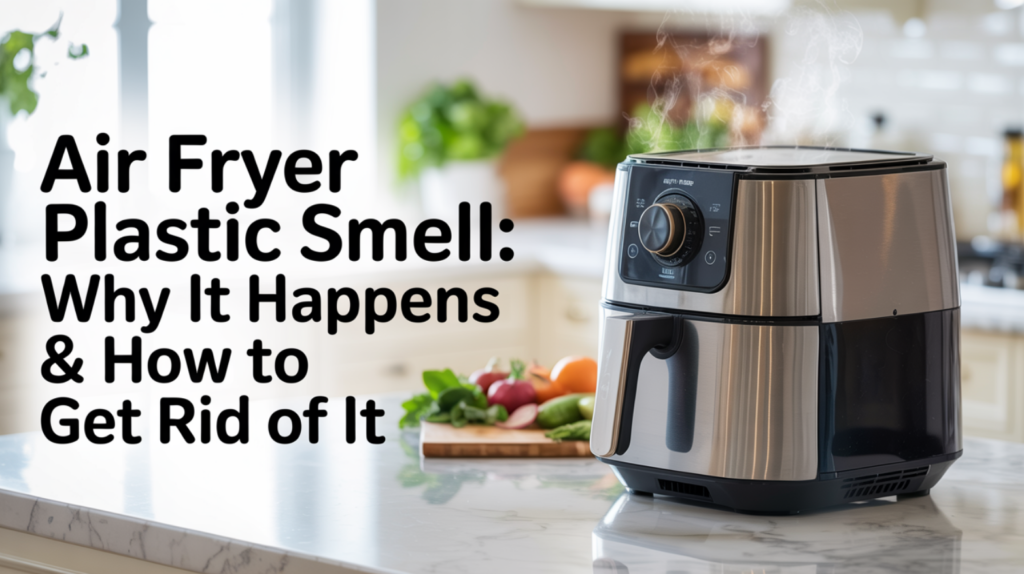
An air fryer is a compact cooking appliance that circulates hot air across coated metal surfaces and internal heating components. When these surfaces heat for the first time, leftover manufacturing compounds release vapors, and this reaction creates the sharp plastic-like odor many people notice during early use.
This relationship between heat, materials, and odor explains why the smell appears suddenly and why it feels strongest when the fryer reaches higher temperatures.
Why Your New Air Fryer Smells Like Plastic
Heat activates chemical residues that settle on internal parts during production.
Those residues cling to heating elements, protective coatings, and metal frames.
As temperature rises, the compounds vaporize and the circulating air distributes the odor throughout the chamber.
Over repeated heating cycles, the remaining residue steadily breaks down.
As a result, the smell naturally weakens with each use.
However, if internal parts overheat or degrade, the air fryer may develop odor because certain materials begin breaking down under excessive temperature, and that pattern signals a more serious issue.
Is Plastic Smell from an Air Fryer Dangerous?
In most cases, the initial plastic odor is not dangerous.
It reflects temporary material reactions rather than toxic exposure.
The situation changes if the smell becomes stronger instead of weaker.
Growing odor may indicate overheating insulation or electrical stress inside the unit.
When that happens, continuing to use the appliance is unsafe, and the safest response is explained on the main guide where users can learn why air fryer smell patterns reveal whether the appliance remains safe to operate and what steps should follow.
How to Remove Plastic Smell from a New Air Fryer
Removing the smell means clearing the surfaces that hold residue and preventing it from returning.
Remove all hidden packaging.
Even tiny protective films can produce strong odor when heated.
Wash removable parts.
Warm water and mild soap dissolve surface compounds, while complete drying prevents moisture from trapping new odors.
Run empty heat cycles.
High heat breaks down remaining residue and releases it without contaminating food.
Neutralize with natural deodorizing.
Lemon vapor binds with odor molecules and refreshes internal surfaces gently.
If food smells continue to linger even after this process, the deeper routine where residue is cleared from hidden surfaces helps, especially when people follow the method that explains how to remove odors that remain trapped inside the air fryer after cooking.
When Plastic Smell Signals a Real Problem
A healthy air fryer gradually becomes odor-free.
A defective unit produces smell that intensifies over time.
If the odor remains sharp after several full cleaning cycles, internal materials may be overheating.
At that stage, continued use risks further damage and potential safety hazards.
How to Prevent Plastic Smell in the Future
Clean surfaces reduce residue buildup.
Clear airflow prevents heat concentration.
Balanced cooking loads prevent grease from coating internal parts.
Together, these habits protect the internal system from both lingering odors and long-term material stress.
Final Thoughts
Air fryer plastic smell forms when internal materials react to heat during early operation.
With proper cleaning, controlled heating, and gentle deodorizing, the smell normally disappears completely.
An air fryer functions best when its internal surfaces remain clean and its ventilation system stays unobstructed.
When those conditions remain stable, the appliance operates smoothly and without unpleasant odor.