Air fryer odor control is not really about “nice smells.” It’s about managing three real things: residue that holds odor, heat that reactivates it, and airflow that spreads it. Once you understand that loop, you can stop smells at the source instead of chasing them with repeated washes.
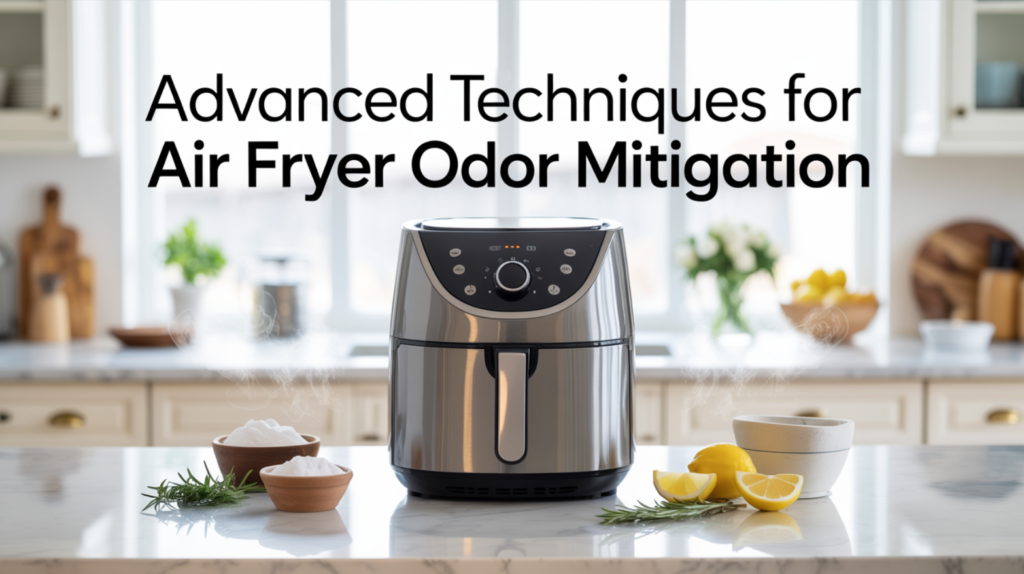
This guide goes beyond basic cleaning and gives you higher-leverage techniques you can apply to almost any air fryer, drawer style or oven style, without using harsh chemicals or risking the coating.
1) Do an “odor map” before you clean anything
Advanced deodorizing starts with locating the smell’s home base. A quick odor map prevents you from scrubbing the wrong area.
How to map it
- Smell the basket alone (outside the fryer).
- Smell the drawer/cavity (with the basket removed).
- Smell near the rear vents (where air exits).
What it tells you
- Basket smells strongest → residue on basket/crisper plate is holding odor.
- Cavity smells strongest → drips, rim buildup, or damp corners are feeding it.
- Rear vent smells strongest → airborne grease is settling deeper in the airflow route.
That last one is why some air fryers “seem clean” but still smell during preheat.
2) Strip the invisible film without aggressive scrubbing
When odor returns quickly, the surface usually has a thin greasy layer you can’t see but heat can “wake up.” Your goal is to remove that film gently so the coating stays intact.
A practical approach is to reset the basket and crisper plate with a soak + soft clean, then focus on seams and edges where residue quietly hides. If you want a reliable method that clears that odor-holding layer without damaging nonstick, follow the approach where the basket gets a true deep clean all the way into the corners and holes.
3) Use heat strategically: the controlled “reset cycle”
Heat is often the problem, but it can also be the solution, if you use it in a controlled way.
Reset cycle
- Clean and dry the parts completely.
- Run the air fryer empty at a moderate temperature for a short session.
- Let it sit closed for a few minutes, then open it and let fresh air flush the cavity.
This does two things: it evaporates hidden moisture and reveals whether the smell is still being generated by residue versus dampness.
If the odor spikes during the reset cycle, that’s your signal the smell source is still inside, usually a film, a hidden drip zone, or trapped crumbs.
4) Attack “carbon crumbs” like a mechanic, not like a dishwasher
A burnt smell is different from a fishy smell. Burnt odor often comes from tiny carbonized bits reheating again and again, especially in corners, under the crisper plate, or around the rim groove.
Advanced move: use a soft brush and a flashlight
- Look for dark specks in seams, holes, and rim channels.
- Brush them out dry first, then wash.
Burnt crumbs behave like charcoal briquettes, they keep producing odor every time you heat them.
5) Drying is a deodorizing technique, not an afterthought
If your air fryer ever smells “stale cabinet” or slightly musty, moisture is usually involved. Moisture also makes food odors stick longer because damp surfaces hold odor compounds more easily.
High-impact habit
- After washing, leave the drawer slightly open for 20–30 minutes.
- Stand the basket so air can reach the underside and rim grooves.
It feels small, but it prevents the “cleaned it… now it smells weird” problem.
6) Use absorption methods where they work best: closed space, long time
Some smells live in the air fryer’s internal space more than on the surface. That’s when absorption methods outperform extra scrubbing.
Instead of rushing, treat the fryer like a sealed container and let a deodorizer work while the unit is closed. If you need a proven approach for stubborn odor that keeps coming back even after washing, the best results come when you follow a lingering-odor removal plan that targets the smell cycle itself (residue → heat → airflow), not just the basket.
7) Prevent “odor transfer” with smarter cooking barriers
Advanced odor mitigation also includes prevention, especially if you cook fish, wings, or heavily spiced foods.
Barriers that help
- Perforated parchment liners (airflow still moves; drips reduce)
- A shallow foil tray for very saucy foods (in models that allow it safely)
- Lightly oiling food instead of the basket (less aerosolized grease)
Less airborne grease means less smell settling in the cavity and vents.
8) Manage the “aerosol problem” (this is what most people miss)
When fat heats, it can turn into a fine mist. That mist coats the inside walls and carries odor deep into the airflow zone. Even a perfect basket wash won’t fully stop odor if aerosolized grease keeps building up.
Two ways to reduce it
- Cook at the lowest temperature that still gives you the result you want.
- Avoid overcrowding, because overcrowding increases steaming and splattering.
Better airflow around food usually means less greasy mist, and less smell left behind.
9) Handle silicone parts and seals as odor sponges
If your model has silicone bumpers, gaskets, or removable seals, treat them like odor magnets. Silicone can hold aroma from fish and spices longer than metal does.
What to do
- Remove them if the manufacturer allows it.
- Wash gently with mild soap.
- Let them air dry fully outside the fryer.
A clean basket won’t smell clean if the silicone still carries yesterday’s seasoning.
10) When the smell is “chemical” or “hot plastic,” stop and switch strategy
A harsh chemical odor usually isn’t a “deodorizer problem.” It can come from early-use burn-in residue, overheating oils, or materials that need a different handling approach. In those cases, don’t try to mask it with strong scents. Focus on ventilation, gentle cleaning, and appropriate heat management until it clears.
Keep your system organized
If you want one central place that ties together odor prevention, deep cleaning, and targeted fixes (so you’re not reinventing the wheel every time), use the complete air fryer odor and cleaning guide as your pillar page.
A calm final reset
Advanced odor mitigation is simply controlled cause-and-effect: remove the film that holds smell, stop crumbs from reheating into burnt odor, dry the cavity so dampness doesn’t create a new smell, and reduce greasy mist so odor doesn’t rebuild. When you apply these steps consistently, your air fryer stops “remembering” old meals, and your kitchen goes back to smelling like what you’re cooking now, not what you cooked last week.