If your air fryer smells “old” even when you’re cooking something mild, cooking residue is usually the reason. A thin layer of oil mist, crumbs, and baked-on proteins can turn into a stubborn odor source that reactivates every time the fryer heats up.
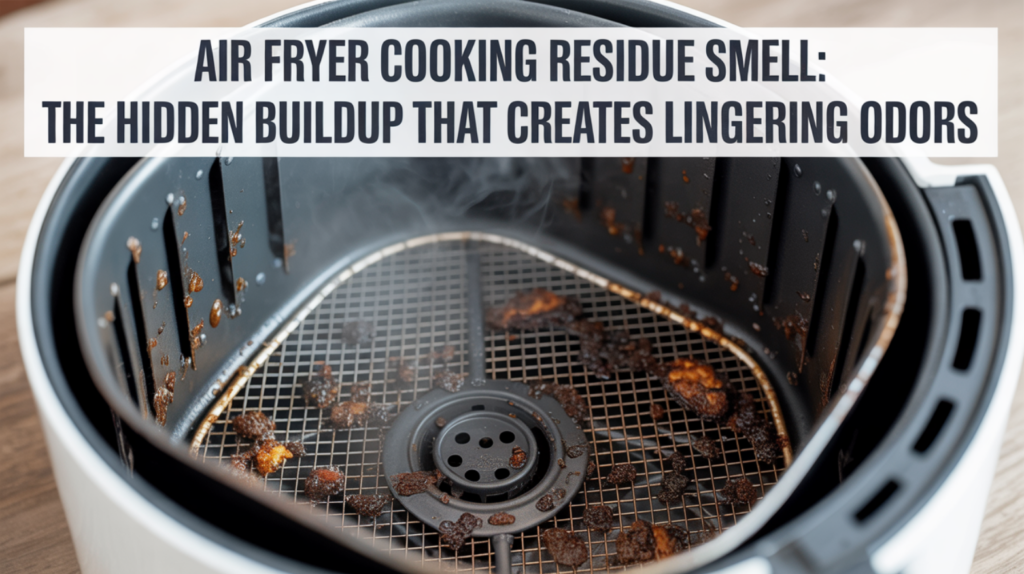
An air fryer moves hot air through a small chamber, and that airflow carries more than heat. It also carries microscopic grease particles from food. When those particles land on surfaces and repeatedly heat up, they transform into a sticky film that holds onto smell. That film becomes the real problem, because it keeps producing odor long after the original meal is gone.
The smell isn’t in the food, it’s in the buildup
Residue behaves like a “scent memory.”
It absorbs the aroma of whatever you cooked, then re-releases it when temperature rises.
That’s why a fryer can smell like last week’s fish even when you’re making fries today. The odor is not a mystery. It’s a predictable result of residue warming up again in the hot airflow path.
If the odor only appears during heating, the pattern often matches the behavior explained in the guide about smells that show up mainly when the unit heats up.
What cooking residue actually looks like (and why you miss it)
Residue doesn’t always look dirty. Sometimes it looks like:
- A slightly glossy surface that feels “slick” even after washing
- Darkened seams or corners that seem harmless
- A faint sticky patch on the tray edge
- A thin film that you only notice when the basket catches light
The tricky part is that this film can hold odor even when the fryer looks clean. Visual cleanliness and odor cleanliness are not the same thing.
Where residue hides inside an air fryer
Instead of cleaning harder, clean smarter by targeting the places airflow touches most.
Basket mesh and crisper plate
These surfaces collect oil mist and protein splatter. As the residue bakes, it becomes harder to remove and stronger in smell.
Drawer rails and lower cavity edges
Grease settles and thickens here. This area often gets skipped during quick washes, so the smell keeps returning.
Upper chamber surfaces near the heating zone
Even if you never touch the top area, residue can still end up there through airflow. Once it heats repeatedly, it starts to smell “burnt” or stale.
When residue thickens near hot surfaces, some users confuse it with a more severe situation like a burnt plastic smell that can signal overheating materials. The difference is that residue odors usually improve after deep cleaning, while true burnt-plastic odors tend to persist or worsen.
A residue-focused clean that actually removes the smell source
Think of this as stripping the odor layer, not “freshening” the fryer.
1) Remove and soak the parts that catch the most residue
Basket and tray surfaces release odor best when the film softens first. Warm soapy water loosens the layer so it can lift away instead of smearing.
2) Wash until the surface stops feeling slick
A slick feel means residue remains. When the surface feels neutral (not oily), you’ve removed the odor source rather than spreading it.
3) Dry completely before reassembling
Moisture traps smell and makes old odors hang around longer. Drying prevents the chamber from turning into a damp odor box.
4) Use heat as a final “airflow rinse”
After cleaning and drying, an empty heat cycle helps drive off any remaining odor compounds. This step works best when residue is already removed.
If the smell has become deeply stubborn, the broader routine that shows how to remove lingering air fryer odors by resetting the chamber can be the fastest route back to a neutral smell.
Why residue smell can come back quickly (and how to stop that loop)
Residue builds faster when:
- Foods are very oily or fatty
- Cooking temperatures are consistently high
- The basket is crowded (more grease mist, less airflow)
- The fryer is stored closed while still warm and humid
Once you notice the pattern, prevention becomes simple. The goal is to stop residue from becoming a permanent film.
A short post-cook wipe and an occasional deeper wash keeps the “odor layer” from forming in the first place.
Final thoughts
Air fryer cooking residue smell comes from a thin film of baked oils and proteins that builds up along the airflow path. That film absorbs aromas and releases them again during heating, so the smell feels like it’s “always there” until the residue is removed.
An air fryer is designed to circulate clean hot air, and residue disrupts that clean system. When the basket, tray, and chamber surfaces stay clean and fully dry, the fryer returns to what it should feel like, fresh, neutral, and ready for the next meal.