Summer grilling season has a special kind of smell, smoky spices, sweet marinades, sizzling fat, and that “charred edge” aroma people love. The problem is that when you bring those same bold foods indoors to an air fryer, the smell can stick around longer than you want, especially in hot weather when air feels heavier and kitchens don’t “clear out” as quickly.
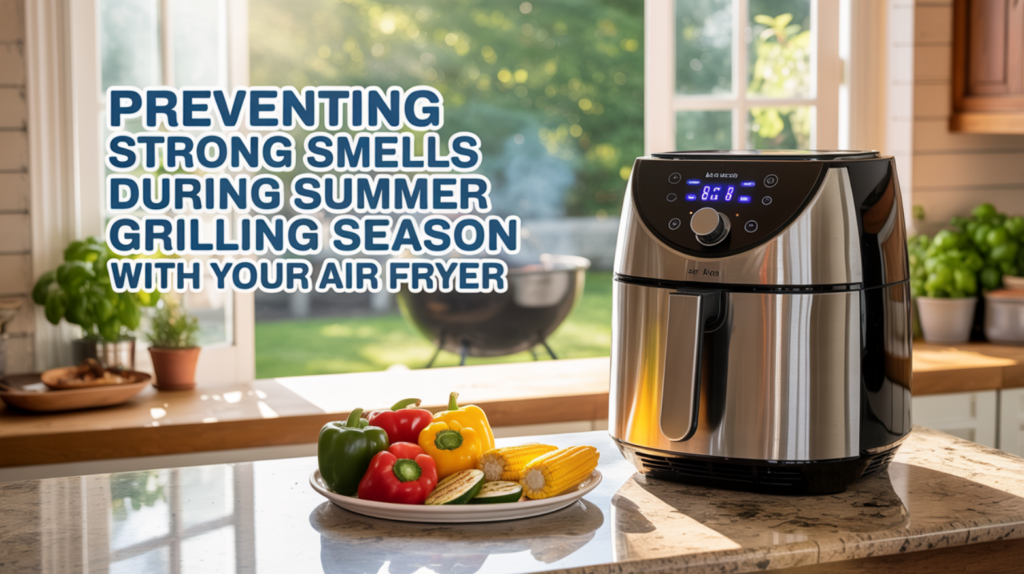
Here’s the grounded reality: an air fryer is a compact convection cooker that moves hot air fast. That strong airflow makes food crisp, but it also spreads cooking vapors efficiently. If you manage airflow, residue, and timing, you can enjoy summer-style meals without turning your whole home into a lingering smokehouse.
Why summer smells hit harder indoors
In warm months, a few things combine to make odors feel louder:
- Heat helps cooking aromas stay active in the air longer.
- Humidity makes the air feel “thicker,” so smells can feel more persistent.
- Summer foods tend to be bolder: BBQ sauces, garlic, chili rubs, smoky seasonings, fatty cuts.
- Windows may be closed because of heat, dust, or insects, reducing natural ventilation.
So your goal isn’t to eliminate all aroma (that’s unrealistic when you’re cooking). Your goal is to keep smells from becoming stale, trapped, and repeatable.
Pick the right foods for “indoor grilling nights”
Some summer favorites are naturally high-odor. That doesn’t mean you can’t cook them, it just means you need a strategy.
Lower-odor choices that still feel like grilling
- Dry-rub chicken thighs (less sauce splatter than wet marinades)
- Veg skewers with light oil and herbs
- Kebabs with yogurt-based marinades blotted slightly before cooking
- Burgers formed with minimal added liquid
High-odor foods that need extra control
- Sticky BBQ sauce (sugar + fat = strong baked-on smell potential)
- Fish (especially oily varieties)
- Garlic-heavy wings
- Fatty meats that drip
If you plan your “strong smell foods” intentionally, the rest of your routine becomes much easier.
The “pre-cook smell shield” most people skip
Before you even turn the air fryer on, do two quick actions that change everything:
1) Reduce surface wetness
Wet marinades and heavy sauces vaporize and splatter. That vapor carries smell, and splatter creates future smells. A simple blot with paper towel keeps flavor while reducing airborne odor.
2) Choose the right liner approach
If you use parchment, make sure it’s sized correctly and weighted by food so it doesn’t lift toward the heating area. A shifting liner can scorch and create a sharp burnt note that lingers.
Make airflow work like an “odor exit,” not a “odor spreader”
Summer cooking smells travel fast because the air fryer fan pushes air outward. The trick is to give that air a clear direction out of your living space.
If you want your home to smell normal again quickly, set up a simple flow path where air moves toward an exit, because small airflow changes can keep strong cooking aromas from drifting through the house while you’re using the fryer.
A few practical placements that help:
- Put the air fryer closer to a window (even slightly open) when weather allows.
- Avoid positioning it near a hallway that funnels smells into other rooms.
- Don’t run a ceiling fan that spreads air across the whole home during cooking.
Cook in “smell-smart phases” instead of one long session
One long cooking session can saturate the air and make the smell feel permanent. Breaking it into phases keeps odors manageable.
Try this rhythm:
- Cook the strongest-smell item first (fish, wings, sauced meat).
- Ventilate immediately afterward for a short clearing period.
- Cook milder items next (vegetables, fries, bread).
This works because odor particles are easier to remove while they’re concentrated, before they settle into fabric and corners.
Stop summer sauces from becoming tomorrow’s smell
BBQ sauce, honey glazes, and sugary marinades are delicious, but they’re also the fastest route to “Why does my air fryer smell burnt every time I use it?”
Sugar cooks onto hot surfaces and turns into a stubborn film. That film reheats with every future cook.
The best defense is not stronger perfume sprays. It’s removing the film before it hardens, using a method that targets the surfaces that repeatedly re-release odor. When strong summer foods leave a lasting smell, it helps to use a cleaning process that lifts baked-on grease and seasoning from the places you don’t notice until the next time you cook.
A quick “after-grill” reset that keeps smells from looping
Summer odors often become a loop: you cook once, then the next day the air fryer “reminds” you of last night. That loop happens when residue stays behind.
Right after cooking (when safe to handle):
- Remove crumbs and char bits first (those create the harshest smell when reheated).
- Wipe any visible sauce spots before washing.
- Wash basket and tray with mild soap, focusing on edges and corners.
- Dry fully before reassembling, so you don’t trap a damp, sour note.
This isn’t about making the air fryer sterile. It’s about preventing yesterday’s bold flavors from hijacking today’s meal.
When “grilling smell” crosses into “check this now”
Most summer cooking smells are normal, but you should pay attention if the odor feels wrong for the food you’re cooking.
A smell becomes more concerning when it’s:
- sharp and chemical-like,
- accompanied by smoke that doesn’t match the food,
- or intensifies even when the basket is clean.
If you ever want a calm way to separate “strong food aroma” from “possible overheating,” it helps to use the pillar guide where the warning signs are explained in everyday terms, because an odor can be a safety signal when it points to burning or overheating instead of normal cooking vapors.
End-of-season tip that makes next summer easier
If you’ve been doing lots of sauced meals all summer, a deeper reset near the end of the season keeps your air fryer from carrying “BBQ shadow” into everything you cook afterward. Once that residue is gone, the fryer goes back to neutral, quiet, clean, and ready for anything.
Closing reality check
Summer grilling season brings bigger flavors, and bigger flavors naturally create stronger aromas. Your air fryer isn’t “bad” for smelling like what you cooked, it’s simply doing what convection cooking does: moving hot air and carrying scent molecules with it. When you guide airflow, reduce splatter, and clear residue before it bakes on, you get the best of both worlds: that satisfying grilled-style taste, without the smell taking over your home.