Yes, in most cases they do. The air fryer is not necessarily producing a different smell in a small kitchen, but the same odor becomes more concentrated, more noticeable, and harder to clear because there is less air to dilute it and fewer places for it to escape.
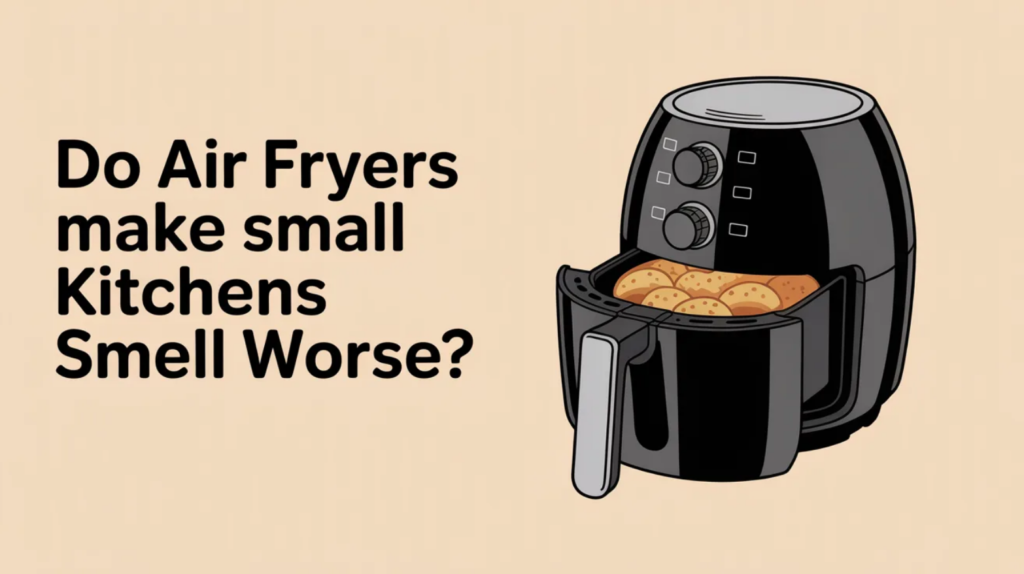
That is why a smell that feels minor in a large kitchen can feel stubborn in a compact one.
First decide whether this is just stronger cooking odor or a safety issue
Stop using the air fryer and unplug it if the smell is electrical, melting, burnt plastic, sharply chemical, or irritating to your eyes or throat. A small kitchen can make that kind of smell feel even more intense, but the real concern is the source, not the room size.
If the smell is clearly food, grease, seasoning, fish, or stale oil, the smaller kitchen is usually making a normal odor problem feel bigger. That means airflow, placement, and residue are the main things to look at.
Why small kitchens make the same smell seem bigger
A small kitchen holds less air. That simple fact changes everything.
When the fryer releases warm, odor-carrying air, there is less space for that odor to spread out before you notice it. The smell reaches your nose at a higher concentration, so it feels heavier and sharper even if the appliance is behaving normally.
The next problem is distance. In a small kitchen, the smell has a very short path to walls, cabinets, curtains, and nearby fabrics. That means the odor does not stay suspended for long. It settles quickly and then lingers.
The final problem is overlap. In many small kitchens, the cooking zone, dining area, hallway, and living area are almost one shared air space. Once the smell leaves the fryer, it is already close to the rest of the home. That is why this issue so often becomes the broader problem of air fryer smell spreading through the house rather than staying in the kitchen.
What usually gets worse in a small kitchen
Smell strength during cooking
The smell often feels stronger within minutes because the room saturates faster. You are noticing concentration more than duration at first.
A quick clue is that you smell the food almost immediately after the fryer starts, especially with bacon, chicken, fish, or heavily seasoned foods.
If greasy meals make the difference especially obvious, the problem often overlaps with grease smell building up inside the air fryer, because heavy foods tend to leave behind the same residue that fuels later odor.
Smell spread beyond the kitchen
In a compact home, the smell can move into adjoining spaces before you have time to react. That happens because warm air does not need to travel far before it reaches the next room or shared area.
That is also why many readers end up wondering how long air fryer smell stays in the house once it escapes the kitchen zone.
Smell clinging to soft materials
Smaller kitchens often place rugs, curtains, coats, chairs, or other fabrics closer to the appliance. That matters because greasy odor sticks to fibers and gets released later.
When readers describe the room as still smelling “cooked” hours later, the fabric side is often a big part of the story. Once that starts happening, the issue usually looks very similar to air fryer smells permeating carpets and curtains in small homes.
Smell returning at the next use
A small kitchen does not create residue inside the fryer, but it makes residue problems more obvious. If yesterday’s grease reheats today, the room fills quickly and the smell feels disproportionately bad.
That is where persistent air fryer food smells and the need to clean the fryer thoroughly enough to stop lingering odors usually come in.
What does not mean the kitchen is the problem
Not every bad smell is caused by the room size.
If the fryer smells strange even when it is clean and empty, the problem may be the appliance itself. If the smell is new-plastic-like and the fryer is brand new, the room may only be amplifying a temporary first-use smell. If the smell is stale or greasy before cooking starts, buildup inside the fryer is usually more important than the kitchen size.
When the answer is “yes, but only with certain foods”
Some foods make the small-kitchen problem much more obvious than others. Fish, bacon, wings, sausages, marinated meats, and heavily spiced foods usually produce more persistent odor because they release stronger vapors or more grease.
Dry foods and milder foods can still smell, but they usually clear more easily because they leave less oily residue behind.
That is why a reader may say, “My air fryer only makes the kitchen unbearable with certain meals.” The room size is still part of the answer, but the food type determines how much the room size matters. Fish is one of the clearest examples, which is why readers dealing with that pattern often relate to air fryer smells after cooking fish.
How to reduce the small-kitchen effect
The fastest improvement usually comes from changing where the odor goes in the first few minutes. Once that smell settles, removal takes more work.
Use the fryer where the room has its best exit path for warm air. That is why the biggest improvement often starts with finding the best place to use an air fryer to reduce smell rather than trying to fix everything afterward.
Start ventilation before cooking starts. In a small kitchen, waiting until the smell is obvious means the room is already filling up.
Keep fabrics, paper items, and anything absorbent farther from the fryer. In a tight space, even a small distance change can reduce how much smell gets stored in the room.
Clean after greasy foods sooner rather than later. A compact kitchen is much less forgiving when the fryer carries old residue into the next cook.
If the home is an apartment or flat, readers usually get the best results when they combine these changes with using the air fryer in a small flat without smell build-up instead of treating the kitchen and the appliance as separate problems.
A quick self-check
A small kitchen is probably the main reason the smell feels worse if these signs match your experience:
The smell appears fast, even with short cooking times.
Nearby rooms pick it up quickly.
Curtains, rugs, or seating seem to hold the smell after the air itself improves.
The same fryer smells much less noticeable when used in a larger or better-ventilated space.
If those signs do not fit, the stronger cause is more likely residue, grease buildup, or an abnormal smell source inside the appliance.
Calm conclusion
Air fryers usually do make small kitchens smell worse, but mostly because the room intensifies and traps normal cooking odor. Less air, shorter distances, and more contact with surfaces all make the smell feel stronger and last longer.
That means the best fix is not panic and it is not guesswork. Treat the small kitchen as part of the smell system. Improve airflow, choose the cooking spot carefully, and keep residue from building up inside the fryer.