An air fryer smell spreads through the house when warm exhaust leaves the appliance faster than the room can remove it. Once that moving air carries grease vapor and food odor into hallways, fabrics, and nearby rooms, the smell stops being only a kitchen problem.
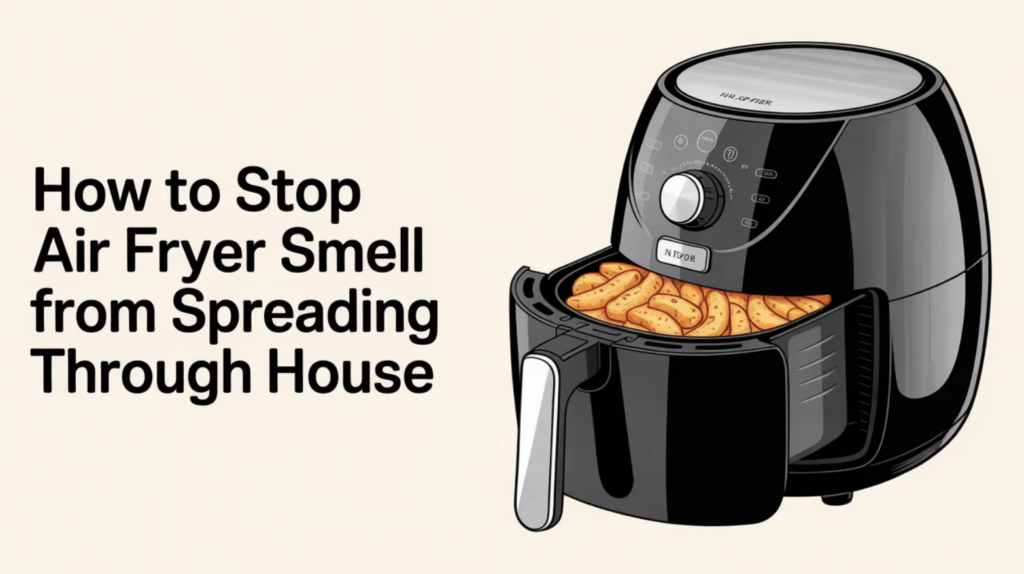
The good news is that this is usually controllable. In most cases, you do not need to “fight the whole house.” You need to interrupt the path the smell is taking while it is still concentrated near the air fryer.
Check the risk first
Usually safe but ventilate and monitor applies when the smell is clearly food-like, greasy, fishy, or stale and the air fryer is otherwise working normally.
Stop using and unplug now if the smell is burning plastic, electrical, rubbery, smoky, or sharply chemical, or if you notice sparking, buzzing, melting, smoke, or a tripped breaker.
A normal cooking odor spreading through the house is usually an airflow problem. A burning or electrical odor is a safety problem instead.
Why the smell spreads farther than expected
Air fryer odor moves with heat first, then lingers because tiny grease particles and odor molecules settle onto surfaces. That means the smell does two things at once: part of it travels through the air, and part of it gets stored on curtains, carpets, chairs, and nearby walls.
This is why a kitchen can smell normal during cooking but the hallway or living room smells stronger later. The moving warm air carried the odor outward first, then the house started slowly releasing it back.
If you are seeing the broader version of this problem, it connects naturally with why an air fryer makes the house smell. If your space is tighter or has weaker airflow, the same pattern is even more noticeable in small apartments without good window ventilation.
The real goal is not “covering” the smell
Trying to mask the smell after it has already spread is the harder way to handle it. The easier approach is to shorten the distance between the air fryer and an exit path, while reducing how much odor escapes into the rest of the house.
That changes the problem from whole-house cleanup to local control.
The fastest way to keep the smell contained
Move the air fryer closer to an exit route
Placement matters because odor follows the easiest air path available. If the air fryer sits near a window or under an exhaust fan, the smell has a shorter route out of the home.
If it sits near a hallway opening, stairwell, or open-plan passage, that same airflow can carry odor deeper into the house instead. This is exactly why air fryer ventilation strategy and placement can change how far smells travel.
Create airflow before cooking starts
Ventilation works better early than late. When a fan or window is already pulling air outward before the food starts releasing odor, the smell is less likely to drift into other rooms first.
Waiting until the smell is obvious usually means some of it has already escaped the kitchen zone.
Keep interior doors closed during cooking
Closing doors works because it interrupts the path between the kitchen and the rest of the house. This matters most for bedrooms, hallways, and nearby rooms with fabric that can absorb odor quickly.
The smell cannot spread as easily if the route is physically broken.
Run the exhaust fan longer than you think you need to
The cooking period is only part of the odor window. Air fryer smell often keeps leaving the appliance for a while after the basket comes out because hot residue and hot internal surfaces are still releasing odor.
Keeping ventilation going after cooking helps remove that delayed wave before it settles elsewhere.
What to do during cooking if the house is already picking up the smell
Do not open the basket more often than necessary. Each opening releases a burst of concentrated hot odor into the room, which makes it easier for the smell to escape the kitchen.
Keep the air fryer away from fabric-heavy areas like curtains, dining chairs, rugs, or upholstered stools. Warm grease vapor clings to soft materials more easily than to hard surfaces, which is why carpets and curtains can hold air fryer smell long after cooking ends.
If the odor is coming from fish or salmon, connect this page naturally to air fryer smells after cooking fish and how to get salmon smell out of air fryer, because oily seafood smells tend to travel farther and linger longer.
If the smell is heavier and stale rather than fresh-food-like, it often overlaps with an air fryer that smells like old grease, because old residue produces a stronger background odor before the new meal even finishes cooking.
What to do right after cooking
Remove the odor source before it keeps venting
Once the food is out, deal with the hot residue quickly. Wiping the basket and drawer after they cool to warm helps because fresh grease releases more smell while it sits hot inside the machine.
If the appliance itself is carrying a stale oily smell, the next step should be removing grease smell from the air fryer rather than only treating the room air.
Let the appliance cool with airflow around it
Do not trap the smell immediately by sliding the basket in and closing everything up. Letting the parts cool with ventilation still running gives the last warm odor a chance to leave instead of pooling in the kitchen.
Wipe nearby hard surfaces if the cook was especially greasy
This helps because airborne grease can land close to the appliance and keep giving off a faint smell even after the air seems better. A quick wipe of the counter and nearby backsplash can cut that lingering note fast.
How to keep the smell from reaching the rest of the house next time
Use the air fryer where the air can leave, not where it can travel. A small shift in placement often does more than a stronger room spray.
Vent early, not after the smell becomes obvious. Early airflow removes odor while it is still concentrated.
Clean the fryer before residue starts venting old smells into the room. This matters because a fryer with built-up odor begins polluting the kitchen sooner, sometimes even during preheat. That is why preventing unpleasant fryer smells with regular maintenance reduces whole-house smell as well as appliance smell.
If room odor is your main problem even when the fryer itself is fairly clean, support methods like air purifiers or odor absorbers placed near the cooking zone can help catch what ventilation misses.
Verification test
A successful fix looks like this: the kitchen may still smell lightly of cooking right after the meal, but the odor should stay mostly local and fade instead of drifting room to room.
Within a short time after cooking, the hallway and nearby rooms should smell noticeably lighter than before. If those spaces still pick up the odor quickly, the airflow path is still carrying smell out of the kitchen or the fryer itself is still venting old residue.
If the smell becomes sharper instead of milder, or starts resembling burning plastic, smoke, or an electrical odor, stop using the fryer.
Conclusion
To stop air fryer smell from spreading through the house, you need to control the path, not just the smell. When you place the fryer near an exit route, start ventilation early, block the route into other rooms, and remove hot residue before it keeps venting, the odor stays contained instead of taking over the house.
The calm next step is simple: treat airflow first, then treat residue second. That combination is what keeps a kitchen smell from turning into a whole-house smell.