If your air fryer smells like fish after dinner, the odor is usually coming from a thin layer of fish oil and protein residue that hot airflow pushed onto the basket, drawer, and inner walls. That matters because the smell is usually not just floating in the air anymore. In most cases, it is sitting on surfaces, and heat keeps reactivating it the next time you cook.
First: decide if this is dangerous right now
Usually safe but ventilate and monitor is the right category when the smell is clearly fishy, oily, or stale-seafood-like and the air fryer is otherwise working normally.
Stop using and unplug now if the smell is actually burning plastic, electrical, rubbery, or sharply chemical, or if you notice smoke, sparking, buzzing, melting, or a breaker trip.
A normal fish smell points to food residue in most cases. A sharp or burning smell points to overheating or an electrical issue instead.
What the smell usually indicates
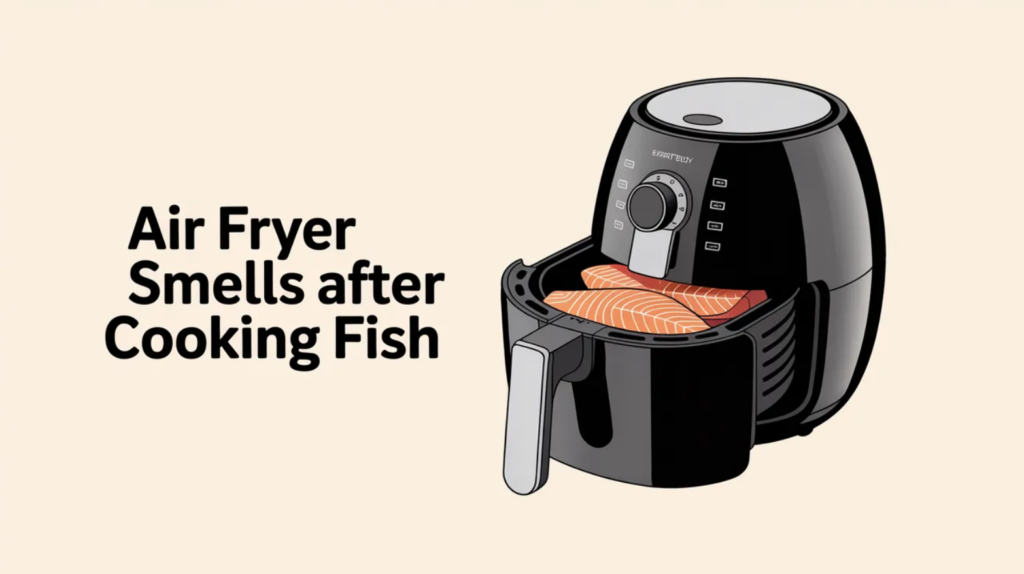
A fish smell after cooking fish usually means the air fryer captured atomized fish oil during cooking, and that oil settled onto hot surfaces. Once that film sticks, each reheating cycle releases the odor again, which is why the fryer can smell fishy even after the meal is gone.
This is also why the smell often seems stronger the next day. The original food is gone, but the residue stays behind and acts like a small odor source every time the appliance heats up again.
If the smell has been lingering across multiple meals, the problem usually overlaps with persistent food smells in the air fryer. If what you are noticing is more of a hidden buildup issue than a fresh fish odor, that usually means cooking residue is holding onto the smell.
Most likely causes, in order
1) Fish oil film on the basket and crisper plate
This is the most common cause because fish naturally releases oil as it cooks, and perforated baskets give that oil many corners and edges to cling to.
Confirmation clue: once the basket cools, smell it by itself. If the odor is strongest there, the fish smell is sitting on the food-contact surfaces.
2) Drippings baked onto the drawer below
Oil and juices fall below the main cooking surface, then bake onto the hotter lower area. That changes a normal food smell into a stale lingering smell because old drippings break down each time the fryer reheats.
Confirmation clue: the drawer smells stronger than the basket, or you can see a sticky yellow-brown film on the bottom.
3) Fish vapor on the inner walls
Hot air does not move only around the food. It also carries microscopic droplets toward the inside walls and upper cavity, which is why the fryer can still smell even after the removable parts are washed.
Confirmation clue: the basket seems fairly clean, but the odor returns when you sniff inside the main body.
4) A liner or foil sheet still holding odor
A used liner traps fish oil and juices, so keeping it inside the fryer keeps the smell concentrated in a small hot space.
Confirmation clue: the smell drops fast after the liner is removed and thrown away.
5) Fish smell mixing with older grease residue
If the fryer already had an old oil film, fish odor can bond to that layer and become heavier and more stubborn. At that point, you are not dealing with a fresh fish smell alone. You are dealing with fish smell embedded in older residue.
Confirmation clue: the smell is dull, heavy, or slightly rancid rather than bright and freshly fishy.
Simple decision path
If the smell started right after cooking fish and still smells like food, treat it as fresh residue first.
If the smell keeps returning over several uses, the odor is probably stored in residue that needs a more thorough wipe-down.
If the smell turns sharp, smoky, plastic-like, or irritating, stop and treat it as a safety issue instead of a cleaning issue.
What to do right now
Ventilate the room first
Open a nearby window or run the kitchen exhaust fan as soon as cooking ends. This helps because warm odor molecules are still airborne right after cooking, so moving them out early reduces how much spreads into the room. If the smell is already drifting beyond the kitchen, it helps to understand why an air fryer makes the house smell in the first place.
Wipe while the residue is still fresh
Let the fryer cool until it is warm rather than hot, then wipe the basket, tray, and drawer. This works because fresh oil lifts more easily before it hardens into a stronger odor film.
Wash the removable parts with grease-cutting soap
Use warm water and dish soap, and pay extra attention to perforations, seams, and the underside of the crisper plate. Soap works because it breaks the oily film that plain water leaves behind.
Wipe the inside walls of the fryer body
This is the step most people skip. It matters because hot airflow carries fish vapor beyond the basket, and that hidden film is often why the smell comes back during the next preheat.
Use a soft damp cloth with a tiny amount of dish soap, then wipe again with a clean damp cloth so no residue remains.
Dry everything completely
Drying matters because leftover moisture can trap odor and create a stale damp note that makes the smell harder to judge. Let the basket and drawer air-dry fully before reassembling.
How to stop it from coming back
The long-term fix is to stop fish residue from baking into the airflow path.
Wipe the basket and drawer soon after cooking fish, because fresh oil removes more easily than cooled oil.
Clean the interior walls regularly, not just the removable parts, because the smell often lives where hot air circulates rather than where food sits.
Throw away used liners right away, because they hold concentrated fish odor in the appliance.
Build in a more thorough odor reset when smells start lingering, because once residue becomes a storage layer, the fryer can smell like old meals even when it looks clean. That is exactly why thoroughly cleaning an air fryer prevents lingering food odors and why regular air fryer maintenance prevents unpleasant smells from becoming a repeat problem.
Verification test
After cleaning and drying, the fryer should smell neutral or only faintly like clean metal and coating when cold. On the next short warm-up, a stubborn fryer may release a brief trace of old odor, but it should fade quickly instead of growing stronger.
If the fish smell comes back strongly as soon as the fryer heats, the residue is still present somewhere in the basket, drawer, or airflow path.
If the smell changes from fishy to burning, electrical, smoky, or chemical at any point, stop using the unit.
Conclusion
An air fryer usually smells after cooking fish because fish oil mist settled onto hot surfaces and turned into a heat-activated odor film. The fastest fix is to remove that film before it keeps reactivating with every new cooking cycle.
When you clean the basket, drawer, and inner walls promptly, you remove the source instead of just covering the smell. That is what actually stops the odor from coming back.