A lingering air fryer odor is almost never “random.” It’s usually leftover cooking residue (often too thin to notice) getting warmed up and pushed around by fast airflow. That combination makes smells feel louder than they would in a pan or oven. The fix is straightforward: remove the odor-holding film, then neutralize what remains, and finally stop the smell from reattaching after your next meal.
This article gives you a practical, brand-agnostic way to clear stubborn odors from any air fryer, basket style, oven style, or compact drawer units, without turning it into a complicated project.
Start with a 10-second odor diagnosis
Before you do anything, match the smell to the likely cause. That prevents wasted effort.
- Old oil / fried smell → thin grease film is still present
- Fish / garlic / spice → odor compounds are trapped in corners and airflow areas
- Musty / damp → moisture sat in a closed drawer after washing
- Burnt smell → carbonized crumbs or drips are reheating
- Plastic/chemical smell → usually early-use residue or overheating components (handle separately)
Once you know the “type,” the solution becomes much faster.
The 3-stage removal plan (works even when you’re not sure what caused it)
Stage 1: Remove the odor “storage” layer
Odors cling to a surface, not to air. If the surface still has a slick feel, it will keep holding smell.
Do this first
- Take out the basket and crisper plate and run your finger lightly across the inner walls.
- If it feels slippery, wash again with mild soap and warm water.
- Focus on the rim, the underside of the crisper plate, and the back corners, these areas collect the film that reheats into smell.
This step matters because neutralizers work best on a truly clean surface.
Stage 2: Neutralize the leftover smell (choose one)
Now that the fryer is physically clean, you’re dealing with what’s left behind, the stubborn scent that comes back during preheat.
Option A: Closed-space absorption (best for “clean but still smells”)
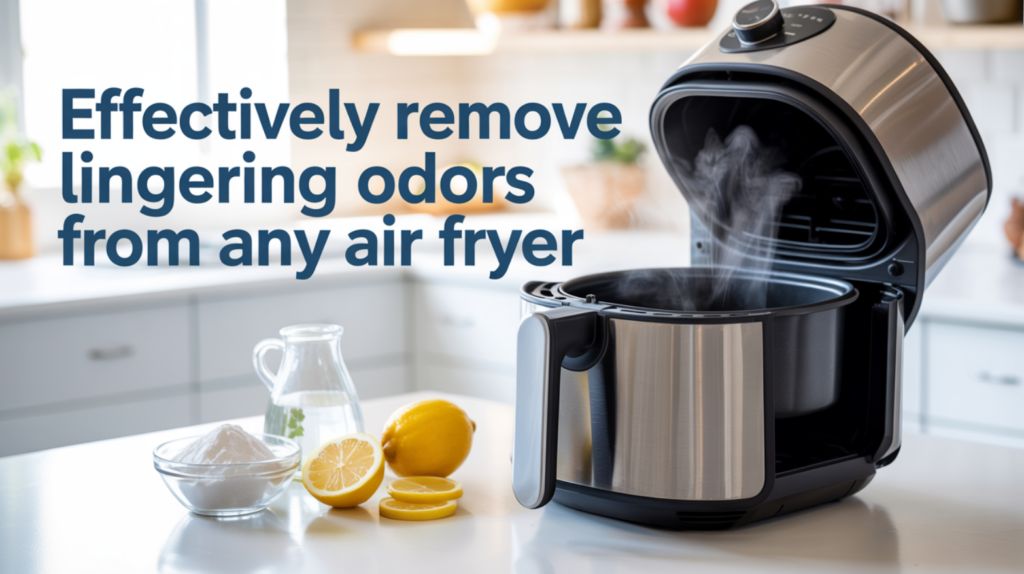
If the odor exists even when the air fryer is cold, it’s usually trapped in the basket space and needs time-based neutralization. In that case, leave a deodorizer inside the closed fryer so it can quietly pull the smell out of the air and off surfaces. The simplest version is baking soda, and the method works best when you let it sit long enough to actually absorb, like the approach described where baking soda sits in the basket to calm persistent food odors instead of being scrubbed and rinsed away too quickly.
Use this when:
- the smell greets you immediately when you open the drawer
- the odor feels “embedded,” not just a cooking after-smell
Option B: Steam + wipe reset (best for heat-activated odors)
If the smell only appears when the unit heats up, steam helps loosen what heat keeps reactivating. Lemon water is a gentle way to do that because warm citrus vapor lifts stale odor without harsh cleaners, and the wipe afterward removes what the steam softened. If your fryer smells fine when cold but “blooms” during preheat, use the technique where warm lemon vapor loosens the odor source so it wipes away easier.
Use this when:
- the odor is strongest during preheat
- the smell is spicy, smoky, or “kitchen-stale” rather than greasy
Stage 3: Drying and airflow (the step most people skip)
Even after you neutralize odor, moisture can bring a different smell back.
To finish properly
- Dry the basket and plate fully.
- Leave the drawer slightly open for 20–30 minutes so trapped humidity can escape.
- If your unit has a removable door/crumb tray (oven style), dry those edges too.
A dry air fryer stays neutral longer because odor compounds don’t cling as easily to damp surfaces.
What to do when the odor keeps returning
If you cleared the smell and it came back two days later, something specific is feeding it. These are the usual culprits:
- Crisper plate underside still has a thin baked film
- Basket rim groove has trapped grease that reheats
- Loose crumbs are hidden near corners and seams
- Post-wash moisture sat in a closed drawer overnight
In that situation, repeat Stage 1 quickly (targeted wash), then choose a different neutralization method than last time. Smell that survives absorption often responds to steam + wipe, and smell that survives steam often responds to closed-space absorption.
A simple “after strong foods” routine (so odors don’t build up again)
If you cook fish, wings, strong marinades, or heavily seasoned foods, a small habit prevents the lingering smell problem before it starts:
- Wipe the basket rim and crisper plate underside while still warm (not hot).
- Wash soon after cooking so grease doesn’t cure into a film.
- Dry fully before closing the drawer.
- Once a week, do a short deodorizing session (absorption or steam) depending on how your fryer tends to smell.
If you want the full system organized in one place, use the main air fryer odor-control hub as your pillar page reference.
Conclusion
A lingering air fryer odor isn’t a mystery, it’s usually residue holding scent and heat reactivating it through airflow. When you remove the invisible film first, then neutralize the remaining smell using either closed-space absorption or steam-and-wipe deodorizing, the odor stops cycling back. Finish with thorough drying, and your air fryer returns to what it should be: a clean appliance that makes food smell appetizing, not familiar in the wrong way.