A stubborn air fryer smell can feel oddly personal, like your kitchen is keeping a memory you didn’t ask for. The good news is you usually don’t need harsh sprays or heavy cleaners to fix it. In most cases, the odor is simply trapped in a thin layer of cooking residue, and natural deodorizers work because they either absorb that smell, lift it with gentle steam, or prevent it from bonding again.
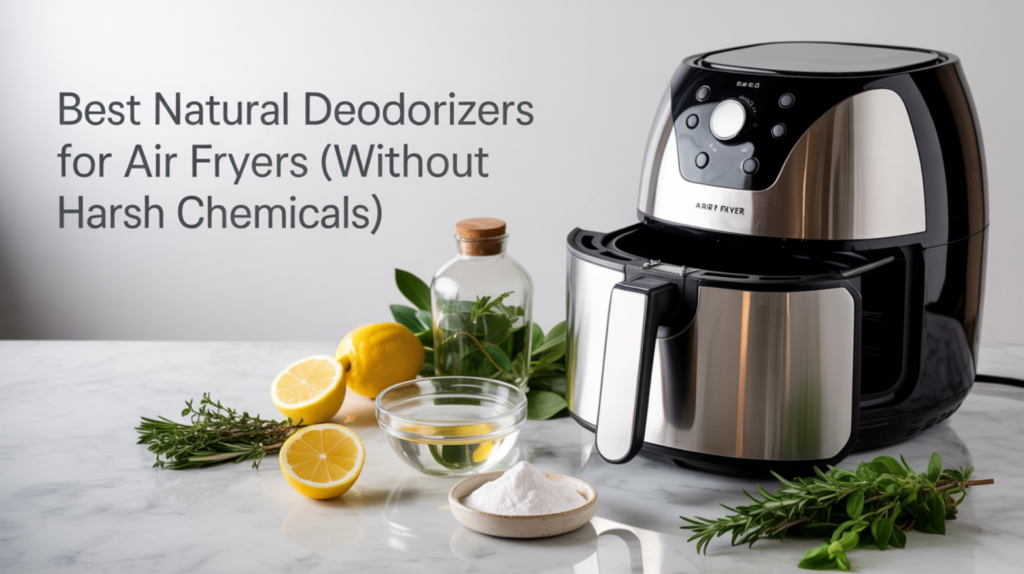
This guide is about calm, practical deodorizing, methods that respect nonstick coatings, won’t perfume your food, and won’t leave a chemical aftertaste in the air.
Why “natural” works surprisingly well for air fryer odors
Air fryers concentrate heat and airflow in a small cavity. That’s great for crisp food, but it also means tiny odor particles keep circulating and settling back onto warm surfaces. When you use a natural deodorizer, you’re not trying to overpower the smell; you’re trying to break the loop so the odor stops reactivating during preheat.
If your basket is still visibly greasy or sticky, clean first and deodorize second. Natural methods shine when the fryer is already “clean” but still smells wrong.
1) Baking soda (the quiet absorber that resets the air space)
Baking soda is the simplest natural option because it doesn’t rely on fragrance at all. It works best when you can give it time in a closed space, especially overnight. If you want the most reliable approach for odors that keep returning, use the method where baking soda sits inside the closed fryer long enough to do its job, like the one explained in the baking soda absorption method for trapped air fryer smells.
Best for: fishy smells, stale oil notes, “clean but still smells” baskets
Avoid when: you’re dealing with a hot plastic or electrical smell (that’s a different problem)
2) Lemon water steam (the fresh lift for “heat-activated” odors)
Sometimes the odor only shows up once the unit warms. Think of it as smell that’s asleep until heat wakes it up. Lemon water helps because warm steam loosens the residue holding that odor, and the citrus vapor leaves the cavity feeling reset instead of “re-cooked.”
This is especially helpful when the smell is persistent but not greasy. If that describes your air fryer, follow the lemon steam routine that clears stubborn fryer odors and then wipe the interior while it’s still slightly warm.
Best for: spice-heavy odors, smoky smells, lingering “kitchen” notes
validates: steam loosens, wipe removes, drying prevents return
3) Activated charcoal (the strongest natural absorber for stubborn odors)
Activated charcoal is like the “heavy-duty” version of baking soda, but still natural and scent-free. It’s used in odor filtration because it traps odor compounds effectively, especially in enclosed spaces. If your fryer has a strong smell that refuses to leave, charcoal can help when left inside the closed basket for a day.
How to use it safely
- Use a small breathable pouch (or a bowl if you have one that fits securely).
- Keep it dry and away from any heating run.
- Leave it inside the closed air fryer for 12–24 hours.
Best for: intense, lingering odors after fish, burnt seasoning, or repeated use
Tip: replace charcoal if it has already been used for odor control elsewhere
4) White vinegar (excellent deodorizer, but use it carefully)
Vinegar is natural and effective, but it has a strong smell of its own, so it’s best used as a controlled wipe, not as a “fill the fryer with vinegar fumes” experiment. A light vinegar-water wipe can neutralize odor on surfaces, especially if your air fryer has that sharp, stale note that doesn’t respond to basic washing.
Safe approach
- Mix a small amount of vinegar into water.
- Lightly dampen a cloth (not dripping).
- Wipe the basket and drawer interior.
- Follow with a water-only wipe, then dry fully.
Best for: sour or stale odors that feel “embedded”
Avoid when: you hate vinegar smell, because you’ll notice it until the unit fully airs out
5) Coffee grounds (a powerful odor sponge, with one warning)
Dry coffee grounds can absorb smells well, but they also leave a coffee aroma behind. If you love that, it suggests a pleasant reset. If you don’t, skip it. The safest way is similar to baking soda: keep the grounds in a small dish and leave the fryer closed for several hours.
Best for: strong food smells when you don’t mind a light coffee note
Warning: coffee aroma can linger, especially in silicone parts
6) Sunlight and fresh air (the underrated deodorizer)
It sounds almost too simple, but air and light help because they reduce trapped moisture and stale air inside the drawer cavity. After cleaning, leaving the basket and drawer open in a well-ventilated area can noticeably reduce odor, especially if your air fryer smells “closed-in” rather than “food-specific.”
Best for: damp smells, “stored appliance” odor
Works well with: baking soda or charcoal afterward
Choosing the right natural deodorizer based on the smell you have
Instead of guessing, match the method to the odor behavior:
- Smell returns during preheat: lemon steam + wipe
- Smell exists even when cold: baking soda or charcoal (closed absorption)
- Sharp stale note: light vinegar wipe, then air dry
- Damp/musty smell: airflow + open-drawer drying
- You want a pleasant scent: coffee grounds (only if you like it)
This keeps you from repeating methods that aren’t suited to the odor type.
Prevention that doesn’t feel like “more work”
Odor prevention isn’t about cleaning constantly; it’s about removing the conditions that let smell settle in.
A simple habit sequence works:
- Wipe the rim and crisper plate underside after greasy meals.
- Dry completely before pushing the drawer in.
- Do an occasional absorption session (baking soda or charcoal) if you cook fish or heavily spiced foods.
If you want one main page that organizes cleaning + deodorizing into a complete system, use the complete air fryer odor and cleaning guide as your pillar reference.
Conclusion
Natural deodorizers work for air fryers because most odor is not “mystery smell”, it’s trapped residue meeting hot airflow again and again. Baking soda and charcoal reset the air space by absorbing what you can’t scrub out, lemon steam helps lift heat-activated odor from surfaces, and careful vinegar wiping neutralizes stubborn stale notes without harsh chemicals. When you choose the method that fits the smell, your air fryer stops carrying old meals into new ones, and your kitchen feels clean again in a way you can actually breathe.