When an air fryer odor refuses to leave, even after washing, it usually means scent is clinging to a thin, heat-reactivated residue in the basket, drawer, or airflow path. Lemon water helps because warm citrus vapor carries a clean-smelling lift, while the mild acidity loosens the “stale cooking” note that often comes back during preheat. This is not a perfume trick; it’s a gentle deodorizing reset that works best after the fryer is already physically clean.
If your air fryer keeps smelling like fish, old oil, or yesterday’s spices the moment it warms up, this technique is built for that exact kind of stubborn odor.
What this technique is actually doing
Persistent odor usually follows a simple chain: grease residue holds scent, heat wakes it up, and airflow spreads it through the cavity. Lemon water interrupts that cycle in two ways. First, the steam softens whatever invisible film is still clinging to corners and holes. Second, the citrus vapor leaves the air fryer smelling fresh instead of “reheated.”
If the basket still has sticky buildup, handle that first, because steam can’t remove thick grease on its own. In that case, start with a proper deep clean of your air fryer basket, then return here for the deodorizing step.
What you’ll need
- 1 lemon (fresh is best)
- Water
- A heat-safe, small oven-safe dish or ramekin that fits your basket
- A soft cloth or sponge for a final wipe
- Optional: a second lemon slice for extra strength
The lemon water routine that actually works
This is intentionally simple, but the order matters.
1) Cut, squeeze, and drop the lemon in
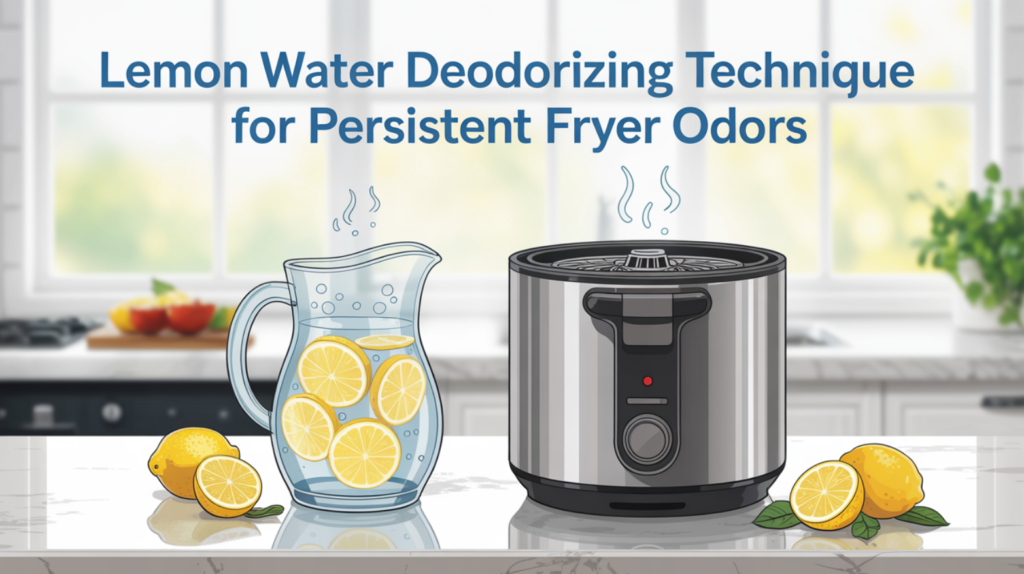
Cut the lemon in half and squeeze it into a small heat-safe dish. Then drop the squeezed lemon halves (or a few thick slices) into the same dish. The lemon flesh keeps releasing aroma as it warms, which makes this much more effective than lemon juice alone.
2) Add water to create steam, not soup
Add enough water to cover the bottom of the dish and partially surround the lemon pieces. You want steady steam, not a deep bath. Steam is the delivery system here.
3) Warm it gently inside the air fryer
Place the dish in the basket and run the air fryer at a moderate temperature for about 8–12 minutes. You’re aiming for a warm, steamy citrus environment, not aggressive heat.
If you notice the odor only appears at high temperatures, you can extend this a few minutes instead of raising heat. Time is safer than intensity for both coatings and seals.
4) Keep it closed afterward
Once the timer ends, turn the unit off and keep the drawer closed for 10 minutes. This “rest” time is where the vapor settles into the nooks, softening the smell source instead of just masking it.
5) Wipe the inside while it’s still slightly warm
Carefully remove the dish and wipe the basket, crisper plate, and drawer walls with a soft cloth. Warm residue releases more easily than cold residue, so this wipe often removes the last invisible film that a normal wash misses.
Then leave the basket out to air-dry fully. A clean smell won’t last if you trap moisture inside a closed fryer.
Make it stronger only if you need to
Some odors behave like they’re glued in place, especially after fish, burnt oil, or smoky marinades. If your first run helped but didn’t finish the job, strengthen the approach without getting harsh.
Try one of these adjustments:
- Two-stage session: Run the lemon water once, rest 10 minutes with the drawer closed, then run it again for a shorter burst.
- More lemon surface: Use thicker slices instead of only juice, so more citrus aroma releases into the steam.
- Wipe the “odor zones” twice: The rim, the underside of the crisper plate, and the back corners are common scent traps.
If the odor is stubborn in a “stale cabinet” way rather than a “cooking” way, baking soda can quietly finish the job after the lemon steam lifts it. In that case, the air fryer may respond well when baking soda absorbs the leftover smell in the closed basket overnight.
Safety and common mistakes that reduce results
A few small mistakes can make this feel like it “did nothing,” even though the idea is solid.
- Using too much heat: High heat can bake residue harder and can also stress nonstick surfaces. Gentle steam is the goal.
- Skipping the rest time: If you open the drawer immediately, you lose the vapor effect too quickly.
- Not wiping afterward: Steam loosens residue, but wiping removes it. Without the wipe, the odor can return.
- Running it when the fryer is dirty: Citrus vapor can’t compete with heavy grease buildup; it needs a clean surface to work on.
A quick “is it working?” sniff test
After the fryer cools and dries, run it empty for two minutes at a moderate temperature, then pause and smell.
- If the smell is now faint or neutral, you’re done.
- If it’s clearly improved but still noticeable, repeat the lemon routine once more.
- If it’s unchanged, the odor might be coming from something else entirely, like heat-reactivated manufacturing residue in a newer unit. In that case, the air fryer may have an odor caused by factory oils or early-use burn-in, and lemon won’t be the main fix.
Keeping your air fryer fresh after this
Once you’ve won the odor battle, the goal becomes not letting odor rebuild.
A simple rhythm works well:
- Wash soon after greasy foods.
- Dry completely before closing the drawer.
- Use lemon steam occasionally after strong-smelling meals, not every day.
If you want one place that ties cleaning habits and deodorizing tactics together, the complete air fryer care guide keeps everything organized so you don’t have to reinvent the process each time.
Conclusion
The lemon water deodorizing technique works because warm citrus steam loosens the thin residue that keeps odors trapped, and the closed-drawer rest time lets that vapor do real work instead of disappearing too fast. When you follow it with a gentle wipe and a full dry, you’re not just covering the smell, you’re removing the conditions that keep it coming back. The result is an air fryer that heats up without that dreaded “what is that smell?” moment.