An air fryer can look clean and still smell “off.” That happens because odor isn’t only a visible mess. It lives in thin grease film, tiny burnt crumbs, and the damp corners that never fully dry after washing.
Deodorizing without harsh chemicals is simply the practice of breaking that odor chain in a gentle way. You lift residue that holds smell, you neutralize what’s left, and you dry the appliance so stale air doesn’t get trapped again.
The “no-harsh-chemicals” rule that keeps this safe and effective
Before you try any method, keep one simple rule: if you wouldn’t want the scent inside a warm food appliance, don’t use it.
That’s why strong sprays and heavy cleaners can feel wrong here. They may smell “clean,” but heat can re-activate their fragrance and leave your next batch of fries tasting like a cleaning aisle.
First: remove the hidden smell source (because deodorizing works best on a clean surface)
Deodorizing works when you’re dealing with faint leftover odor, not when you’re trying to perfume over a stubborn film. So the first step is always gentle removal.
Warm soak + soft brush pass
Let the basket and drawer sit in warm water with mild dish soap for a short time, then use a soft brush to lift the residue from mesh and corners. This is where smells hide, because the grid traps oil in tiny pockets.
If your air fryer odor has been building for weeks, it’s often faster to use a proper toolkit rather than improvising. That’s why the best cleaning kit setups for stubborn smells are so helpful when you want results without aggressive scrubbing.
Wipe the walls, not just the basket
Even if you never see grease on the drawer walls, a thin layer can still be there. That film is one of the biggest reasons the smell returns when the unit heats up.
Gentle deodorizing methods that actually work
Once the surfaces are clean, these methods remove leftover odor in a way that feels calm, simple, and food-safe.
Method 1: Baking soda “rest and absorb” (best for stale storage smells)
Baking soda works by absorbing odors over time. It’s slow, but it’s reliable, especially when the air fryer smells worst when you open it after a day or two.
How to do it
- Make sure the basket and drawer are fully dry.
- Place a small bowl or open container of baking soda inside the drawer (not touching the heating element).
- Leave it overnight with the drawer closed.
This is a gentle reset. The next day, the smell usually feels softer, less sharp, and less “stuck.”
Method 2: White vinegar steam (best for sour, fishy, or greasy notes)
Vinegar helps neutralize certain odors and can loosen faint film you missed. You’re not “cleaning with vinegar” aggressively here. You’re using mild steam contact to lift lingering smell.
How to do it
- Put a small heat-safe bowl with a little water and a small amount of vinegar in the basket.
- Run the air fryer briefly at a low-to-moderate temperature, then let it sit with the drawer closed for a few minutes.
- Remove the bowl and wipe the interior lightly.
The vinegar smell fades quickly once you air it out, and the greasy odor usually fades with it.
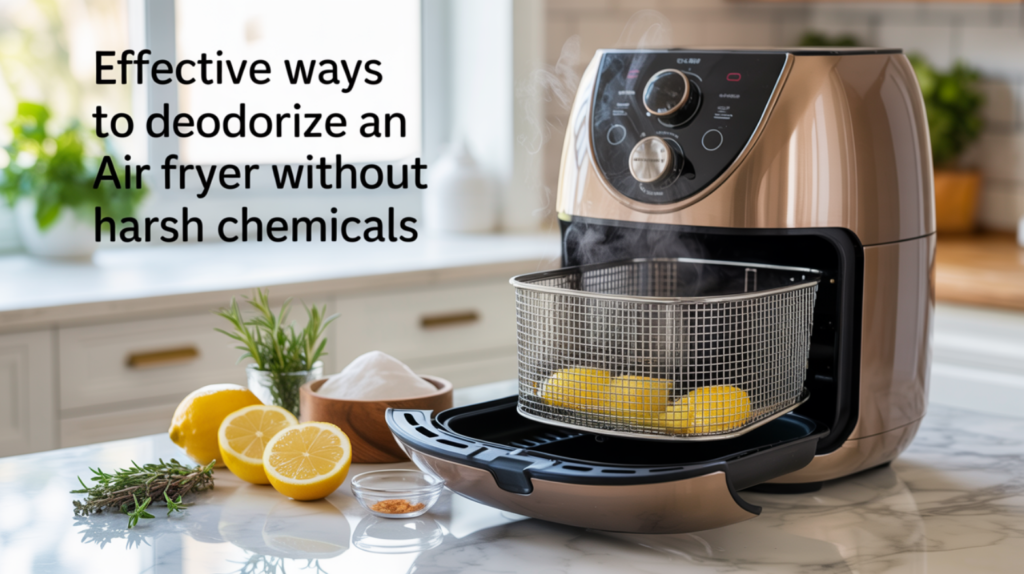
Method 3: Lemon water heat cycle (best for “cooked odor” that won’t leave)
Lemon adds a fresh, clean note, but the real benefit is the warm moisture helping release trapped odor. This one feels especially nice when the air fryer has that “old food” smell even after washing.
How to do it
- Put a small heat-safe bowl of water with lemon slices in the basket.
- Run a short, low heat cycle.
- Let the unit cool, then wipe and air-dry.
It’s not magic. It’s moisture + gentle aromatic lift, and it often leaves the fryer feeling “newer” again.
Method 4: Activated charcoal nearby (best for the kitchen air around the fryer)
Sometimes the fryer is fine, but the room holds the smell. In that case, you’re deodorizing the space, not the appliance.
This is where simple odor-absorbing accessories that trap lingering smells can help, especially if you cook fish, frozen snacks, or anything that leaves that fried-air feeling hanging around.
Drying is the part most people skip (and it’s why odor comes back)
A slightly damp basket can smell “old” by the next day. Moisture holds odor molecules, and a closed drawer traps them.
The easiest fix: air-dry with intention
- Let parts dry completely before reassembling.
- If possible, leave the drawer slightly open for a while so trapped air escapes.
- Store accessories dry, not stacked wet inside the drawer.
This feels small, but it changes everything because you stop creating the conditions odor loves.
When deodorizing isn’t enough (and what that usually means)
If you’ve cleaned, deodorized, and dried properly and the smell still appears during preheat, you may be dealing with a material or component issue rather than leftover food odor.
In that case, the calmer solution is to address the source, and the complete air fryer odor guide helps you connect the dots between cleaning, deodorizing, and when parts or usage habits become the real cause.
Conclusion
Deodorizing an air fryer without harsh chemicals works because odor follows a predictable path: residue holds smell, heat releases it, and trapped moisture keeps it alive. When you clean gently, use simple neutralizers like baking soda or mild steam methods, and let everything dry fully, the appliance usually returns to a neutral, “nothing” smell, which is the best outcome.
And once your air fryer smells normal again, it’s surprisingly relaxing. You stop bracing for that first hot blast of odor, and cooking feels easy again.