Stubborn air fryer smells usually aren’t “in the air” anymore. They’re stuck on something solid, baked oil on the basket mesh, a smoky film on the drawer walls, or a thin grease layer that turns sharp the moment heat comes on again.
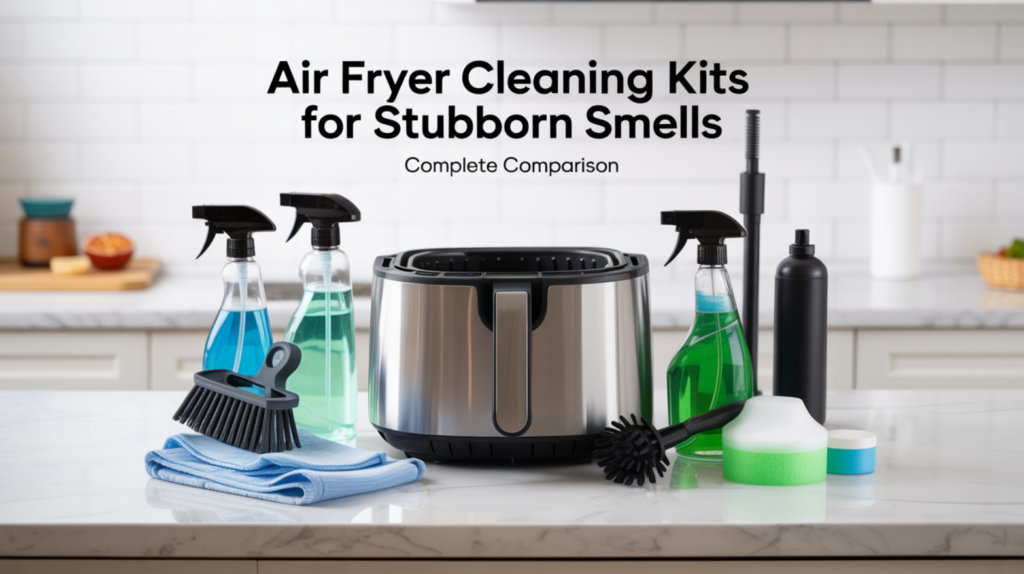
A cleaning kit helps because it combines the right tools for two jobs at once: loosening hardened residue and lifting the odor-carrying film without damaging nonstick surfaces. When you pick the kit that matches your mess, the air fryer stops re-releasing yesterday’s smell and goes back to smelling like… nothing at all.
What makes a “smell-removing” cleaning kit different from normal cleaning supplies
Not every scrubber that cleans a pan should touch an air fryer basket. Air fryer odors cling to coatings and corners, so the best kits focus on gentle agitation, controlled degreasing, and reaching tight areas.
The three items that matter most
- Non-scratch brush set that can reach the basket grid and corners without stripping coatings
- Microfiber or non-abrasive cloths that lift the thin greasy film (where odor often lives)
- Food-safe degreaser or mild cleaner that breaks down oil without leaving harsh scent behind
If a kit is missing those basics, it may still “clean,” but it often leaves the odor layer behind, especially in the drawer rails and basket edges.
Complete comparison: cleaning kit types and what they’re actually best at
Instead of chasing brand names, it’s more useful to compare kit styles. Air fryer mess is predictable, so the right kit choice becomes simple once you match it to the smell source.
1) Non-scratch brush + detail tool kits (best for basket mesh and corners)
These kits usually include a soft-bristle brush, a narrow crevice brush, and sometimes a small scraper designed for nonstick surfaces. They work well because stubborn smells often come from tiny burnt-on bits you can’t easily see.
This is the kit style you want if your air fryer smells worst right when it heats, because those toasted crumbs and oil spots start “cooking” again immediately.
2) Degreaser-focused kits (best for oily film and fishy odors)
Some kits lean heavily into a cleaner that breaks down grease fast. They’re useful when the smell is more “old oil” than “burnt,” and when the inside walls feel slightly sticky even after a rinse.
The key here is residue control. A strong-smelling cleaner can trade one odor for another, so mild, food-safe formulas tend to feel better in a kitchen where you actually want food to smell like food.
3) Steam and soak-style kits (best for people who hate scrubbing)
These kits usually come with items meant to soften residue through heat, moisture, and time. They’re helpful when you’re dealing with a stubborn smell but you don’t want to grind at the basket with repeated scrubbing.
They shine when the odor is “deep” and persistent, because softened residue releases more easily, and fewer repeated scrubs means less wear on coatings.
4) “All-in-one bundle” kits (best for maintenance, not extreme stink)
These usually include cloths, a brush, maybe a cleaner, and sometimes a couple of extras like gloves or sponges. They’re convenient for weekly upkeep, but they’re not always the best answer when the smell is truly baked in.
If you’re dealing with an air fryer that makes you flinch when you pull out the drawer, you often need either a detail-tool kit or a degreaser-focused kit first, then an all-in-one kit later for maintenance.
How to choose a kit based on the smell you’re fighting
A smell pattern is basically a clue. When you notice when the odor appears, you’re already halfway to choosing the correct kit.
If it smells sharp during preheat
That usually points to burnt residue on hot surfaces. A detail brush kit is the best starting point because it can reach the tiny zones where crumbs hide.
If it smells “greasy” even when cold
That usually points to an oily film. A degreaser-focused kit (with non-abrasive tools) is the safer choice because it lifts the odor layer instead of just moving it around.
If it smells fine until you open the drawer
That usually points to trapped odor plus leftover film. A kit with cloths and a gentle cleaner helps, but your storage and drying habits matter too, especially if you’re not using odor-control accessories that absorb lingering smells near where you store the unit.
What to avoid in “air fryer cleaning kits”
Some kits look impressive but work against you. If your goal is a neutral-smelling fryer, you want cleaning tools that remove residue without creating new issues.
Abrasive pads and metal brushes
They can damage coatings, and damaged coatings hold residue more easily. That turns into a cycle where smells return faster each week.
Heavy fragrance cleaners
A strong scent can linger and mix with heat the next time you cook. That combination often smells worse than the original food odor.
Tools that can’t reach the hard spots
If a kit doesn’t include at least one narrow brush, you’ll keep missing the corners and rails, and those spots love to hold onto burnt grease.
A practical “cleaning flow” that makes kits work better
A kit is only as good as the sequence you use it in. The goal is to loosen first, lift second, and dry fully so smell doesn’t get trapped again.
Step 1: Loosen residue gently
Warm water and a short soak softens the worst spots so you don’t need aggressive scrubbing.
Step 2: Target the odor zones
Use the detail brush on the basket mesh and edges, then wipe the drawer walls where film usually clings.
Step 3: Dry like you mean it
Moisture holds odor. When parts dry fully, the fryer stops smelling stale between cooks.
If your odor keeps returning even after a proper clean, the problem may not be “dirt” anymore. In that case, it helps to check whether the air fryer has a component that’s wearing out and heating oddly, because some smells come from materials rather than residue.
Conclusion
Air fryer cleaning kits work when they match the real cause of the smell: burnt bits in hidden corners, oily film on inner walls, or residue that keeps reheating. The best kits don’t rely on force, they rely on the right brushes, gentle lifting tools, and cleaners that remove grease without leaving their own scent behind.
If you pick a kit style based on how the smell behaves, you won’t just “clean” the fryer. You’ll stop the odor loop, and that quiet, neutral freshness will finally stick around.